"Outside a dog a book is man's best friend, inside a dog it is too dark to read!" -Groucho Marx========="The person, be it gentleman or lady, who has not pleasure in a good novel, must be intolerably stupid." -Jane Austen========="I don’t believe in the kind of magic in my books. But I do believe something very magical can happen when you read a good book."-JK Rowling========"I spend a lot of time reading." -Bill Gates=========“Ahhh. Bed, book, kitten, sandwich. All one needed in life, really.” -Jacqueline Kelly=========
Showing posts sorted by relevance for query The Age of Innocence. Sort by date Show all posts

Saturday, April 16, 2016

The Age of Innocence by Edith Wharton

786700Whenever I read classic literature I question my ability to add anything to the full cadre of information and opinion already available about the novel. This is the case with The Age of Innocence by Edith Wharton. I sit here in front of this blank blog post and the only words which circulate through my head are from Wayne's World, "I'm not worthy." How am I, a lowly person who never even took one English Lit class in college and faked my way through them in high school, qualified to add anything on the discourse in the face of such greatness? Well, I'm not. Instead I shall attempt to pull together a few thoughts and tidbits of information I have gleaned from the tiny bit of research I've done on the book and the author. I hope this will satisfy you, my readers, and encourage you to pick up those classic books which you've always meant to read knowing that you too can at least say something which is interesting and presented in a new way.

First, I selected to read The Age of Innocence to satisfy three reading challenges: Classics Club Spin, the Women's Classic Literature Event, and my own personal challenge to read some of the past Pulitzer Prize winners. I'd long wanted to read something by Wharton, so it seemed like it would be a win, win, win selection and it was.

Reynolds, The Tate Museum
"The Age of Innocence"
Secondly, I was very perplexed by the title, The Age of Innocence. As I read the novel I kept wondering at the title and its meaning. Were the 1870s truly an age of innocence, at least in the minds of those who lived it? Did the characters and their stubborn adherence to their own rules of conduct make the appearance of innocence to outsiders? Or was the title relational, comparing the 1870s in New York to 1920s Europe, where Wharton was when she wrote the book? I concluded, in my mind, it was probably some combination of all three. So imagine my surprise when I learned that Wharton titled the book after a famous Reynolds painting entitled, "The Age of Innocence." Ha! Got me.

The setting, old New York in the 1870s, was handled very deftly by Wharton. It was really obvious that she had lived the life she was describing since she knew it so intimately. The rules and snobbery by which the characters lived their lives: who was in and who was out; what to eat and what to wear; where to vacation and what to do while there. Everything was spelled out. One got the impression that Wharton was poking fun at the stupidity of it all without being funny or ironic in the text. Here is a quote from the book which describes a dinner party in which the guests were served Roman punch.
Roman punch made all the difference; not in itself but by its manifold implications--since it signified either canvas-backs or terrapin, two soups, a hot and a cold sweet, full decolletage with short sleeves, and guests of a proportionate importance. (Chapter XXXIII)
Wharton also seemed to poke fun at old New York by giving her characters funny, odd names. There were no Bills or Williams in the bunch. Instead there were characters with unique names like Newland Archer, Manson Mingott, Sillerton Jackson, Emerson Sillerton, Julius Beaufort, and Lemuel Struthers. Not exactly hilarious names but odd enough to make this reader pause and notice.

The Age of Innocence is the story of a love triangle but not in the modern and irritating angle which involves a girl who has to choose from two sexy boys. This story begins with Newland Archer, who is newly engaged to May Welland, meeting May's cousin, the Countess Olenska, for the first time. May represents the best and the worst of old New York, while the Countess appears to embrace the opposite. Archer is attracted to both the old and the new and it just about tears him apart. The lack of sex makes this book more full of passion than ones where the sexual act is explicit. When Newland finally decides to take the plunge, so to speak, his plans are thwarted by the Countess leaving town.
This was her answer to his final appeal of the other day: if she would not take the extreme step he had urged, she had at last yielded to half-measures. He sank back into the thought with the involuntary relief of a man who has been ready to risk everything, and suddenly tastes the dangerous sweetness of security (Chapter XXX.)
Near the end of the story there is a quote which seems to sum up life in old New York perfectly, 
It was the old New York way of taking life “without effusion of blood”: the way of people who dreaded scandal more than disease, who placed decency above courage, and who considered that nothing was more ill-bred than “scenes,” except the behavior of those who gave rise to them.
I can totally relate to the ending where Newland (spoiler alert) decides to go home rather than meet Madam Olenska again after thirty years of separation. We all have our memories of past loves and events associated with that person. Those memories are real to us. I, for one, am not sure if I want to have those memories wrecked by present realities. But readers who crave happy endings will find this finale frustrating.

Apparently Edith Wharton lived in France during or right after WWI and became very disillusioned with the life she had lived before in old New York. She penned The Age of Innocence, her tenth novel, as a reaction to those feelings. It won the Pulitzer Prize in 1921, the first time the prize was awarded to a female author. The prize was awarded amid a controversy where the lead person on the committee ignored the recommendations of the other judges to award the prize to Sinclair Lewis for his classic, Main Street, in favor of Wharton's The Age of Innocence. Since both books have stood up to the test of time, I am glad the award went to Wharton since she was female.

In an effort to know more about the author, I visited the website about Edith Wharton's past estate, The Mount in Massachusetts. It was designed by the author herself. It looks like a very lovely place which clearly shows the author's love of art and symmetry, something I recognized in her writing. After viewing the webpage I have added a visit to The Mount to my bucket list. It will be a long trip from Washington State, though.

In conclusion (this blog post is much longer than I originally thought it would be) I can wholeheartedly recommend The Age of Innocence to my readers. I wasn't as enraptured with the love story as I was with the peek at a by-gone age and era shown us of 1870s New York. It is amazing to think there were people who lived such gorgeous, frivolous lives as the Archers and the Wellands. Read it for that reason alone and you will gain new insights into American history and how people lived (at least some of them) in the past.


Tuesday, March 15, 2016

Classics Club Spin book: Age of Innocence by Edith Wharton


786700
I am embarking on reading another Classics Club spin book. This time the spinner stopped on #8 which, on my list,  was Edith Wharton's The Age of Innocence. Written in 1920 this book won the Pulitzer Prize for fiction in 1921. I'm actually pretty excited to dig into this classic. Here are a few gems I gleaned from Spark Notes (at least I admit it!):
  • Edith Wharton was 57 when she wrote The Age of Innocence. 
  • She was living as an expatriate in Paris after WWI and was concerned with what she saw was happening in the world as it moved toward a more modern, mechanical age.
  • She grew up in New York to a very wealthy family. She enjoyed all the benefits that her station in life and wealth could afford but she still saw that her life was very confined by the societal confines put on her. 
  • In the book she called people, like her own family, Old New York. 
  • "To Wharton, Old New York imposed on its members set rules and expectations for practically everything: manners, fashions, behaviors, and even conversations. Those who breached the social code were punished, with exquisite politeness, by the other members."
  • She was unhappily married to a man, thirteen years her senior. From her experiences, it is believed, she formed her character Ellen Oleska, who had to face the temptations of adultery and the horrors of divorce.
  • Wharton was awarded the Pulitzer Prize under a cloud of controversy. Two of the members of the selection committee wanted to award Lewis' Main Street as the winner, but the chairman overturned their decision and gave the award to Wharton for its “wholesome atmosphere of American life and the highest standard of American manners and manhood.” Wharton wondered if they had understood the book at all (Reader's Almanac).
So now I dig in and see what the book shall reveal to me. The version I am reading is 380 pages long. I have seven weeks in which to finish it, if I am able to complete it by the deadline of May 2nd. If I stay on schedule that is 55 pages a week, a very doable goal.

I'm off to find a cozy spot for an afternoon of reading.

Works Cited

"The Age of Innocence." SparkNotes. SparkNotes, n.d. Web. 15 Mar. 2016.
"A Controversial Pulitzer Prize Brings Edith Wharton and Sinclair Lewis Together." Reader's Almanac. The Library of America, 28 June 2011. Web. 15 Mar. 2016.

Friday, December 16, 2016

The Women's Classic Literature Event Finale Update

I had a very successful year reading classics by women authors. Please click on the links to see my original review of each of the books.

1. The Yearling by Marjorie Rawling (1938)/Jan. 13, 2016
     This book just blew me away. Rawling really wrote a fabulous coming-of-age book about a lonely boy and his pet deer. Of all the books on this list the writing was the most vivid and descriptive. Nearly a year after reading it I can still picture scenes clearly.

2. The Age of Innocence by Edith Wharton (1920)/April 16, 2016
     When I created my original list of books I'd like to read this year I focused first on Pulitzer Prize winners so I could kill two birds with one stone since I am attempting to read as many past Pulitzer winners as I can. The Age of Innocence was the first book written by a woman to win the Pulitzer and it did not disappoint.

3. And Then There Were None by Agatha Christie (1939)/June 19, 2016
     2016 marks the year I finally read something by Agatha Christie. We actually read this book for my SOTH book club. We had a fun discussion on it, too. One of the gals shared a story how she once purchased enough of the books for her honors class, then ripped out the last chapter from each of the books. The students got to the end of the book and just about died not knowing how it ended up. Of course, those were the days before the Internet. She was teased the students and required a writing assignment before giving them the last chapter to read. What fun. 

4. West With the Night by Beryl Markham (1942)/June 24, 2016
     I became obsessed with Beryl Markham and her writing this past year. I first read a book about her, Circling the Sun, and then two books by her. She describes her life in Kenya and I was just swept up in her prose.

5. A Good Man Is Hard to Find and Other Stories by Flannery O'Connor (1955)/July 7, 2016
     I hadn't done my homework on Flannery O'Connor before I launched into reading her short story collection here. I wasn't prepared for her Southern Gothic style or her racism. But despite this I was captivated by her use of foreshadowing and other literary techniques. I have actually thought about her stories much more than I thought I would after I finished the book.

6. The Splendid Outcome by Beryl Markham (1987)/ July 24, 2016
     This is a collection of eight or nine short stories by Markham. I didn't like them as much as her book West With the Night but a few of them really touched me with their African-ness.

7. Out of Africa by Isak Dinesen (1937)/ October 23, 2016
     I really struggled to finish Out of Africa by Dinesen. I slogged my way through it finally and then didn't even write a review of it. The first part of it and the last chapters are quite good and touching but the middle bits just did not spark my imagination. I'm afraid I went to the well one too many times on my Africa phase. What I find so interesting is how famous this book and Karen Blixen's story are yet West With the Night, set at exactly the same time in Kenya, is by far the superior book.

8. Little Women by Louisa May Alcott (1868)/ November 27, 2016
     It isn't always advised to reread books one loved as a child. Rereading Little Women provided case in point. What I fondly remembered from my childhood seemed to lose a bit luster on the reread plus most of the moralism and piety just irritated me. 

Should I stick with all women classics again in 2017 or should I add back in the option of reading any classic authored by both men and women?

Tuesday, July 20, 2021

Are these the 'Best of the Best' Pulitzer Prize novels?


This week I've been reevaluating my Pulitzer Prize Challenge, thinking perhaps I should abandon it and just make an attempt to read the current winner each year and not worry about going back and attempting to read past winners. With this idea running through my head it occurred to me that perhaps I should check out which books are considered the best and make an attempt at reading those and leaving the others.

What I discovered after doing a little research here, here, here, here, here, here, and here, these eighteen Pulitzer Prize winning novels were mentioned the most (at least three of the seven lists) as the best of the lot. (Note: only two lists were compiled in 2020 all the rest before that date, thus few recent winners were even mentioned, obviously.) I've now read all the eighteen books on this 'Best of the Best Pulitzer' list I've created and have decided to continue reading as many of the past winners as I can.

The 'Best of the Best' Pulitzer Prize Winners for Fiction


1. To Kill a Mockingbird by Harper Lee (1961, six lists)

I read TKAM for the very first time in 2003. I loved it instantly and wondered what took me so long to get to it. I listened to the audiobook narrated by Roses Pritchard. Her voice, with a sweet southern accent, is now the voice of Scout to me. My review, of sorts.

First line: "When he was nearly thirteen years old, my brother Jem got his arm badly broken at the elbow."


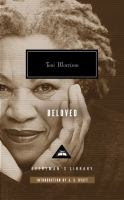
2. Beloved by Toni Morrison (1988, six lists)

I read Beloved in 2010 and I wished I'd been part of a college lit class so to discuss all the symbolism. It blew me away but I found that I needed/wanted help to understand it. After I'd book-talk this for my students many were attracted to the idea of its ghost story but sadly I'm not positive any of them actually ever finished it. My review.

First line: "124 was spiteful."


3. The Color Purple by Alice Walker (1983, six lists)

As a high school librarian I made an attempt to read most of the books that were recommended for students to read before they graduated. This one, read in 2009, didn't make as big of an impact on me as the play we saw in New York City starring Cynthia Erivo in 2018.

First line: "You better not tell nobody but God."


4. The Interpreter Of Maladies: Stories by Jhumpa Lahiri (2000, six lists)

One of the reviewers on Book Riot picked The Interpreter of Maladies as her favorite Pulitzer over TKAM because she's read this short story collection over and over and it always speaks to her. I found all the stories very memorable. (My review)

First line: "The  notice informed them that it was a temporary matter: for five days their electricity would be cut off for one hour, beginning at eight p.m."


5. Grapes of Wrath by John Steinbeck (1940, six lists) 

I wasn't able to tell from the seven lists if this is anyone's favorite Pulitzer, or if it is just one book that it is agreed everyone should read. As often happens with me, the hardest part of reading this classic book was starting. What I appreciated so much was how Steinbeck was writing about such big events in US history in real time. Profound. (My review)

First line: "To the red country and part of the gray country of Oklahoma, the last rains came gently, and they did not cut the scarred earth."


6. Shipping News by E. Annie Proulx (1994, five lists)

I was surprised to see this book on five of the lists because I thought I was the only one who loved it. It is so quirky and odd. I read it in 1997 the first time and several times since. Looking back through my blog I see I never reviewed it. But I did mention it many times on my 'lists of favorites' over the years.

First line: "Here is an account of a few years in the life of Quoyle, born in Brooklyn and raised in a shuffle of upstate towns."


7. The Confederacy of Dunces by John Kennedy Toole (1981, five lists)

TCOD is one of the funniest books I've ever read experienced. Hilarious! Actually, I recommend listening to the audiobook to get the full impact of the story set in New Orleans. Ignatius J. Reilly is possibly the most memorable character in literature. (My review from 2013)

First line: "A green hunting cap squeezed the top of the fleshy balloon of a head."


8. All the Light We Cannot See by Anthony Doerr (2015, four lists)

I not only love this book but I've done a lot with it: two book clubs meetings, an evening event with the author and I wrote two reviews of it. Check out both of them here and here.

First line: (Leaflets) "At dusk they pour from the sky."

9. The Amazing Adventures of Kavalier and Clay by Michael Chabon (2001, four lists)

Why does TAAOKAC deserves a spot on the 'best of the best' list? One reviewer said she was dazzled by it. "It wasn't just its technical perfection—physical description, character development, perspective, time shifts, dialogue, metaphor—and [Chabon] deployed them gracefully, without apparent effort, with inflections of 1940s New York and the language of comic books." (My review.)

First line: "In later years, holding forth to an interviewer or to an audience of aging fans at a comic book convention, Sam Clay liked to declare, apropos of his and Joe Kavalier's greatest creation, that back when he was a boy, sealed and hog-tied inside the airtight vessel known as Brooklyn, New York, he had been haunted by dreams of Harry Houdini."


10. The Age of Innocence by Edith Wharton (1921, four lists)

Edith Wharton was the first female to win a Pulitzer for a novel, and only the third overall. It has stood the test of time with its story of unfulfilled/scandalous love. I read this masterpiece in 2016 as part of the Classics Club Spin challenge. (My review.)

First line: On a January evening of the early seventies, Christine Nilsson was singing in Faust at the Academy of Music in New York.


11. Middlesex by Jeffrey Eugenides (2003, four lists)

Such a complex book about many seemingly unrelated topics: life as a transgender individual, the Armenian genocide, and the Detroit riots of 1968. I listened to the audiobook in 2007 and it has improved in my memory since that time to almost epic proportions.

 First line: "I was born twice: first as a baby girl, on a remarkably smogless Detroit day in January of 1960; and then again, as a teenage boy in an emergency room near Petosky, Michigan, in August of 1974."


12. The Road by Cormac McCarthy (2007, four lists)

After my husband has read this his description of unrelenting dread and the nearly hopeless struggle of a father and son who survived an worldwide apocalypse was a bit off-putting, making me not so eager to start it. But I was profoundly touched by the love each had for the other. In the end love is all we will have. (My review.)

First line: "When he woke in the night and the cold of the night he'd reach and touch the child sleeping beside him."


13. The Angle of Repose by Wallace Stegner (1972, three lists)

I am a Wallace Stegner fan and have enjoyed everything I've read by him. I read TAOR in 1995 and confess that my memory of it is a bit hazy though I do recall being swept up in the story and the setting.

First line: "Now I believe they will leave me alone."

14. The Brief Wondrous Life of Oscar Wao by Junot Diaz (2008, three lists)

This book fairly blew me away. First, who is the narrator? I couldn't figure it out until well into the book. Then all the mysticism or fuku connected to Dominican Republic and some history of the island. Oscar is a marvelous, quirky character. I'd be remiss not to mention the footnotes. Be sure to read them. All of them. (My review)

First line: "Our hero was not one of those Dominican cats everybody's going on about -- he wasn't no home-run hitter or fly bachatero, not a playboy with a million hots in his jock."


15. The Old Man and the Sea by Ernest Hemingway (1953, three lists)

I was in junior high in 1971 or '72 when I read TOMATS so I have only the vaguest of memories of it. I do recall thinking it was a pretty good story after all the torture of reading it for class was done. That said I am not a big fan of Hemingway's sparse style of writing so I doubt I'll reread this one to see what I think of it as an adult.

First line: "He was an old man who fished alone in a skiff in the Gulf Stream and he had gone eighty-four days now without taking a fish."


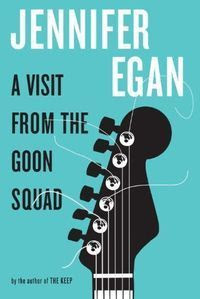
16. A Visit From the Goon Squad by Jennifer Egan (2011, three lists)

The BookRiot reviewer said, "I loved her book, a funky retro-current account of the music industry meets the e-age and the excellently funny chaos that ensues from there." I listened to the audiobook so I think I missed what made this book so unique in terms of format. (My review)

First line:  "It began the usual way, in the bathroom of the Lassimo Hotel."

17. The Hours by Michael Cunningham (1999, three lists)

The Bookriot reviewer said hands down The Hours is the best Pulitzer. "Cunningham writes beautifully, and he does a wonderful job of getting in the heads of three very complex women: Virginia Woolf herself; Laura Brown, a 1950s housewife; and a Clarissa Dalloway-esque character, Clarissa Vaughn." As I read the book, I kept picturing the movie. (My review.)

First line: (Prologue) "She hurries from the house, wearing a coat too warm for the weather."


18. Lonesome Dove by Larry McMurtry (1986, three lists)

Having just read Lonesome Dove last year, this wonderful book is very fresh in my mind. Just about every line is quotable and I can picture all of the action in my head. At 800+ pages in length I 'lived' in the old West for weeks while I read it and I didn't want to leave when I was finished. So I gave it to my husband and had the fun of reliving the book through him. (My review.)

First line: "When Augustus came out on the porch the blue pigs were eating a rattlesnake -- not a very big one."

Now I recognize that this list is sorely out-of-date already. The most recent book to make it onto the list is All the Light We Cannot See from 2015. We've had six years of awards since that date and surely one or more of the most recent books should have at least been in contention for this 'best of the best'  list. I also realize that the lists I drew from were actually just lists of opinions. As my husband and I were discussing my final eighteen titles, he remarked that there are probably very few people alive who have read all 90+ Pulitzer Prize fiction winners, and unless a person had read them all they shouldn't be making a 'best of the best' list. Good point. And that would be me. I've only read 40 and that number includes a few of the finalists. What if one of the best books is just one we haven't read yet? One of the reviewers in the Book Riot article said she'd only read six Pulitzer winners. That is a fairly small field to pick from. So my research is flawed. Very flawed. But as I look over this list and compare it to the whole Pulitzer list, I bet I'm not very far off. Accept this project for what it is -- me trying to decide which of all the Pulitzer winners should I make an attempt to read before I close out my personal Pulitzer Challenge.

Update, July 4, 2023 --- I've completed reading all of the books on this list and linked my reviews.

What is your favorite Pulitzer Prize winning novel?

What books from the master list are conspicuously missing? See full list here.

Sources used to create this list:

Decades represented:

1920s-1; 1930s-0; 1940s-1; 1950s-1; 1960s-1; 1970s-1; 1980s-4; 1990s-2; 2000s-5; 2010s-2

-Anne

Sunday, March 20, 2016

Sunday Salon, March 20, 2016


Weather: Overcast and grey. Yesterday was lovely, though. It seemed that all our neighbors were out working in their yards which is a clear sign that spring is here! Update, since I started writing this blog, it has started raining. Sigh.

Death of a family friend: My Dad's best friend, Charlie, died this past week. They have been friends for over fifty years. In their retirement these two friends would get together several times a week to talk and laugh. Just about every time I have visited my parents in the last ten years or so, we have seen Charlie and his beautiful wife Lorraine. His death is such a poignant reminder that the clock is ticking. Today I shed tears for my father because he lost a good friend.

University of Oregon Basketball: When one thinks of UO sports, Football usually comes to mind. But this week there is excitement over the men's basketball team which were selected as a #1 seed in the NCAA tournament (of 64 teams.) They play their second game today. You bet we will be watching.

Graduate school interviews: Today Carly is flying out for her first of four graduate school interviews hoping for a slot in a Genetic Counseling program. Keep your positive thoughts and prayers heading her way.

Jane Austen Week: This past week was the tenth annual Jane Austen Week in the library at my school. I showed the Sense and Sensibility DVD which features Emma Thompson and Alan Rickman. It was a little too long for the event, since I have to divide it up to fit into the 1/2 hour lunch period for five days, so I didn't have as much time for trivia and games as I have in the past. The students who stuck it out for all five days really seemed to enjoy it, one group even cheered when they learned that Edward hadn't married Fanny afterall.

For your listening enjoyment: Listen as you read the rest of my blog post, "My Father's Favorite" from the Sense and Sensibility movie:

Book completed this week:
  • Another America by Barbara Kingsolver...a poetry collection by a favorite author. All, and I mean all, of the poems deal with very serious subjects like rape and poor treatment of immigrants. This was a tough read.
Books currently reading (I have a lot of books partially read on my bedside table right now. I hope to finish all of them this week):
  • Four Quartets by T.S. Eliot... this slim volume of poems has long been on my TBR pile. Progress 25%
  • Letters to a Young Poet by Rainier Maria Rilke...another classic I've had my eye on for years. Progress 80%
  • Running the Rift by Naomi Benaron...my book club selection for this coming Wednesday. I got started on the audiobook too late and worry I may not finish in time for our meeting. Progress: 64%
  • Shipwrecked! The True Adventures of a Japanese Boy by Rhoda Blumberg... a gem of a book I found hidden on my library shelf when I was doing inventory this week. Progress: 40%
  • The Porcupine of Truth by Bill Konigsberg...admittedly I haven't read a page of this book all week but I am determined to finish it. Progress: 33%
Classics Club Spin book:
  • The Age of Innocence by Edith Wharton. This will be my fourth Classics club spin book I've read in a year. The spin rules: list 20 classic books, number 1-20. Someone at the Classics Club website spins and announces the "winning" number. Look down your list to see what book you will read. The winning spin number was 8. The Age of Innocence was in the number eight slot on my list. I had hoped to start the book by the end of the weekend but I am still stuck in the middle of five other books (see above) and I want to finish them before I launch into this book. 
Served lunch for homeless folks today: Don and I served lunch at a homeless center today after helping make the sandwiches after church. We served a very simple meal: ham or turkey sandwiches, 
bananas, chips, and Oreo cookies. Afterwards we went out to lunch with another couple who also served food to the homeless folks with us. The irony was not lost on any of us and we commented on it as we munched our sandwiches and soup, or burgers and fries.
Today is Palm Sunday: a day of celebration on the church calendar. Our church celebrated by including children in the service by leading a processional with palm branches and in song. Hallelujah! This week is considered Holy Week with Maundy Thursday and Good Friday.  Next Sunday is Easter! I can't believe it is already here.

Prayers for: 
  • Carly and her Graduate School interview at University of Utah.
  • Dave W. who had a heart-related event at church and had to rush to the hospital.
  • Lorraine, Charlie's widow and for my dad, who lost a friend. 
Batman puzzle: a teacher donated this puzzle to the library. I thought we'd better try it out at home first. Working on it is bringing back lots of memories of reading comics when I was a kid. (see above.)

Saturday, December 3, 2016

2016 Reading Challenges Complete


It may be only December 3rd but I have completed all my 2016 reading challenges. Woot. Woot. No last minute cramming in a few more pages to complete a challenge on the last day of the month this year.

So how did I do and what did I read?

A. Read all the YMA Winners (YA selections only). Complete!
1. Michael L. Printz Award (Best YA literature of the year) 
  • Bone Gap by Laura Ruby
2. Schneider Family Book Award (Teen living with a disability)
  • The Unlikely Hero of Room 13-B by Teresa Toten
3. Alex Awards -10 best adult books that appeal to teen audiences (Pick one of ten)     
  •  Girl at War by Sara Novic; 
    4. Margaret A. Edwards Award (Read one book by the winning author)
    • Name of author David Levithan
    • Title: Will Grayson, Will Grayson; Dash and Lilly's Book of Dares;Lover's Dictionary
    5. Stonewall Children's and Young Adult Literature (LGBT) 
    • Porcupine the Truth by Bill Konigsberg 
    6. William C. Morris Award (First YA novel by author)
    • Simon vs the Homo Sapiens Agenda by Becky Albertalli
    7. YALSA Award for Excellence in Nonfiction for Young Adults 
    • Most Dangerous: Daniel Ellsberg and the Secret History of the Vietnam War by Steve Sheinkin
      8. Coretta Scott King Author Award (African American Author) (The winner is a children's book, so select one of the Honor Books)
      •  X: a Novel by Iliyasah Shabazz and Kekla Magoon
      9. Pura Belpre (Latino Author) 
      • Enchanted Air by Margarite Engle
      B. Read all the Printz Award and Honor books from 2016 (Complete!)
      Award winner:
      • Bone Gap by Laura Ruby---read June 13, 2015
      Honor books:
      • The Ghosts of Heaven by Marcus Sedgwick----read May 11, 2015
      • Out of Darkness by Ashley Hope Perez---read January 28, 2016
      C. Read Pulitzer Prize books---4 completed
      • The Age of Innocence by Edith Wharton
      • The Yearling by Marjorie Rawles
      • The Brief Wondrous Life of Oscar Wao by Junot Diaz
      • The Sympathizer by Viet Nguyen
      D. Read Classics by Women Authors---8 completed
      1. The Yearling by Marjorie Rawling (1938)/Jan. 13, 2016
      2. The Age of Innocence by Edith Wharton (1920)/April 16, 2016
      3. And Then There Were None by Agatha Christie (1939)/June 19, 2016
      4. West With the Night by Beryl Markham (1942)/June 24, 2016
      5. A Good Man Is Hard to Find and Other Stories by Flannery O'Connor (1955)/July 7, 2016
      6. The Splendid Outcome by Beryl Markham (1987)/ July 24, 2016
      7. Out of Africa by Isak Dinesen (1937)/ October 23, 2016
      8. Little Women by Louisa May Alcott (1868)/ November 27, 2016

      E. Goodreads Challenge: Goal: read 105 books for the year. I've read 111 so far! I also intended to make a dent on my Goodread To-Read list. I think I started the year with over 60 book titles on that list and now it is 58 books. I read quite a few books from the list but kept adding more to it. 

      Thoughts:
      This year I focused on reading challenges that advanced my interests and ongoing challenges and I'm feeling really good about what I accomplished. Eight classics and four Pulitzers feels especially good. Since I am always looking for Printz Award winners many of the books on the first and second challenge I had already read in 2015 before turning the calendar page to 2016. It feels a little like cheating but it will be an ongoing situation. When the 2017 Youth Media Awards are announced, I will have already read many of the books. The one challenge I love and I missed this year, Austen in August, was postponed until September and, as you know, I was too slammed that month to participate in a reading challenge.

      Looking forward to 2017:
      Since this year felt just about right to me in terms of reading challenges, I will stick with a similar plan for 2017. I want to continue to read off my Classics and Pulitzer lists. I will read all the YMA winners and the Printz award and honor books, and hopefully this year 'Austen in August' will be in August so I can join in. 


      Saturday, March 26, 2016

      Sunday Salon...Happy Easter

      Happy Easter!

      I am writing this blog post a day early since tomorrow is Easter and it promises to be a busy day.  I have a lot to share this week.

      Weather: It is sunny right now, Saturday afternoon but around here that doesn't mean anything. Rain is a constant threat around here this time of year.

      Holy Week: It was a full week of preparations for Easter. Wednesday we attended a concert at PLU of St. Matthew's passion. The program, Matthauspassion by Sven-David Sandstrom, was in German and included four soloists, a quartet of singers, a large choir, and a full orchestra. The next night we had a Maundy Thursday communion and a tenebrae (Latin for darkness or shadows) service to commemorate the Last Supper of Jesus with his disciples and the events that happened after it that led to the Crucifixion of Jesus. Then last night we were back at church to go through the stations of the cross, taking the opportunity to prepare ourselves spiritually for Easter. Taking the three events together I feel my heart turning toward the cross and prepared for Easter, or Christ risen.

      Sad day: Tuesday we all arrived to school to learn that one of our students had committed suicide the day before. I knew this young man. He was a reader. He participated in all my library activities. He had just signed up to participate in the Cavalcade of Authors West event the end of April. Just the week before his death he had selected his sessions for the Cavalcade and had acted excited about going. His counselor had met with him about his college plans. He had a girl friend. He was doing well in his classes. Obviously something snapped, but it appeared he had all the pieces put together. All of us were caught unawares. We, his friends and teachers, spent the day in a fog of grief. Such a sad, sad day. What a sad end to a promising life. The juxtaposition of his death with meaning of Holy Week, a time of redemption, makes me doubly sad.

      Kathy here: My sister came up for a few days and participated in many of the events of the week with us. We sat together at the Matthauspassion program and had a hard time staying awake. The hour was late, it didn't end until after 10:30 PM, and quite meditative. The combination was soporific on us! Ha! She also came up to school to see me in action one day. She even watched me teach a session on research in a junior US History class. She accompanied me to book club and sat through a discussion of a book which she hadn't read, Running the Rift. Thanks for the visit, Kath!

      Before the Easter Bunny, there was the Easter Dinosaur...or that is what it seemed: Today our neighborhood hosted a big egg hunt. Participating houses put out a balloon, which indicated that the yard could be searched for eggs. At an appointed hour young neighbors ran through our yards looking for eggs. A half hour later, older children came through and cleaned up. As we were leaving the neighborhood en route to the Democratic Caucuses, we saw a group of children being led from house to house by a huge dinosaur. We all had a good laugh about that vision. Carly thought it had a very Easterish message... all the dinosaurs had to die so we could live (on fossil fuels.) Ha!

      Democratic Caucus today: The three of us did our civic duty today and attended a caucus today in our precinct. The caucus system leaves a lot of the electorate out of the process but it does give the attendees a chance to speak their peace.

      Books completed this week:
      • Four Quartets by T.S. Eliot... not sure I loved the poems in this volume, though they do contain some wonderful and quotable phrases.
      • Letters to a Young Poet by Rainier Maria Rilke...not what I expected, which I thought was mostly writing advice. This book contains advice on a whole host of subjects, including sex. Ha!
      • Running the Rift by Naomi Benaron...a book club selection. We had a very good discussion on this book on Wednesday mostly centered around the Rwandan Genocide.
      • Shipwrecked! The True Adventures of a Japanese Boy by Rhoda Blumberg... a gem of a book I found hidden on my library shelf when I was doing inventory this week about the first Japanese man to come to America.
      Currently reading:
      • The Porcupine of Truth by Bill Konigsberg...admittedly I haven't read a page of this book all week but I am determined to finish it. Progress: 33% (I said the same thing last week.)
      • The Age of Innocence by Edith Wharton...I have finally started this book (just barely) which is my Classics Club selection. 
      • Girl Waits With Gun by Amy Stewart...another book club selection and my current audiobook. This book is a mystery set in 1914 New Jersey. Progress:33%
      • Teaching with Heart: poems that speaks to the courage to teach edited by Intrator and Scribner
      Starting to make plans for Spring vacation...which will be a staycation this year. Ours plans for a trip to somewhere warm and relaxing fell through so now we are making creative plans for doing activities close to home. More on this next week.

      Happy Easter!


      Monday, October 10, 2011

      Paper Covers Rock by Jenny Hubbard


      Moby Dick, the whale, could be a symbol of a ghost or phantom. And his white color could, therefore, represent innocence.  Surely a regular-colored whale would represent no such thing. Captain Ahab's relentless chase then might be a symbol of an attempt to regain innocence.

      I'm certainly no Melville expert. I haven't even read Moby Dick yet I reveled in all the literary allusions in Paper Covers Rock by Jenny Hubbard to the great masterpiece of American literature. It is a coming-of-age story about Alex who experiences a loss of innocence after the death of Thomas, a friend and classmate. No matter what he does, he cannot go back and regain it.  Alex describes loss of innocence as "the knowledge that your brain, no matter how much you cajole it, can never make your heart pure." (73) Alex, in an attempt to purge his soul, attempts to write the not-so-great-American-novel (journal). In the process he "falls in love" with his English teacher as she helps him find his gift of writing and the music of poetry which seems to just pour out of him.

      Rarely have I found a YA book so full of symbolism, poetry, and literary allusions. This book begs to be taught right along side its inspiration, Moby Dick. But that does not mean that it is dry or stuffy. I think, rather, it is meant to be chewed on and savored. Even the title of this book is perfect. Named for the childhood game ROCK-PAPER-SCISSORS it becomes clear that certain decisions trump others.

      Here are some of my favorite quotes from the book which I think will give you for the a sense of the beauty of Hubbard's writing.  I hope you enjoy and savor them!

      "After Thomas dies, everything seems outlined with electricity as if the school is at attention, poised for war. The boxwoods long the brick sidewalks appear taller, topped with a hundred little eyes. Even the lampposts look as if they are conspiring." -p.10

      "In the days after Miss D-- read my poem in class, a whole new vista of knowledge spread out before me...I was learning how to float across the horizontal lines that I'd always thought were reasonable borders." -p. 29

      "Writing is about making choices, Miss D-- says. One word or phrase or title over another. So many options that they're almost overwhelming. Which is why it is sometimes so easy to grab the cliché, to reach out to what is familiar. But don't."  -p. 72

      "It is the time of day when the sun turns treetops into keepers of light.  After redoing my homework...I run through that light, up one side of the hill and down the other, imagining possiblities..."  -p. 93

      "The brain is like a tree, and the tree has roots so deep that you have no idea what it is that grounds you." -p. 130

      "Poetry is a language unto itself, where words carry more than their weight, where white space on the page is profound silence. Poetry is a way of seeing the world with your feelings." -p. 148

      "I conjure Miss D--'s voice reciting my poems, the clip-clop of the lines carried her voice, her rocking voice, which is the rocking of the water, which is the rocking of my body as I lay me down to sleep."  -p. 161

      "I want to pick up the words that have fallen out of her mouth and hide them away somewhere dark, somewhere deep." -p. 169

      Hubbard, Jenny. Paper Covers Rock. New York: Delacorte, 2011. Print.

      Thursday, January 15, 2026

      Review: SUNRISE ON THE REAPING


      Title: Sunrise on the Reaping by Suzanne Collins (Hunger Games #0.5)

      Book Beginning quote:
           "Happy Birthday, Haymitch!"
           The upside of being born on reaping day is that you get to sleep late on your birthday. It is pretty much downhill from there.
      Friday56 quote:
           So don't feed the nightmares. Don't let yourself panic. Don't give the Capitol that. They've taken enough already.
      Summary: It is the Quarter Quells which means there will twice as many tributes competing in the Hunger Games this year. Twenty-four in all. So when Haymitch Abernathy is selected to represent one of the four from District 12, he isn't really surprised. This is his story.

      Review: Back in 2008 I became a Hunger Games fan. I was a fledgling teen librarian at the time and I was thrilled to find a book kids were really excited about. To a small degree the series became like that generation's Harry Potter. I wasn't blogging at the time but by the time Catching Fire came out a year later I was, so I did a combination review of books. Read it here. Over the next several years I re-reviewed both of the books once more (Hunger Games here; Catching Fire here) and had many more mentions of the books in my blog when I created several different lists of favorite/most popular books in the library. In 2010 when we were preparing to receive the third book in the series, Mockingjay, I was thrilled and created an announcement post. (Read it here.) I ordered three books to arrive the day it came out in August 2010 so my daughters and I could all read it at the same time. Here we are doing just that:

      Me and my college-age daughters reading Mockingjay the day it arrived in August 2010.

      And here is my review of Mockingjay written just five days after the launch of the book.

      Fast forward ten years to 2020 when Suzanne Collins published the fourth book in the series, The Ballad of Songbirds and Snakes. I was retired by then so I have no idea what kind of reception the book got in the library. Were teens familiar with the series anymore? I didn't know. My younger daughter, who was home with us for COVID lockdown, and I planned to read this one at the same time but my older daughter hijacked my copy of the book before I could get to it. Not together, but the three of us all read it eventually. I didn't like this prequel, considered #0.0 in the series, as much as the originals. (Read my review here.) For one thing I thought the book was too long and could easily have been published as two books. And I realized I didn't feel the need to know how President Snow got started with the Hunger Games. I am realizing just now as I type this, perhaps I didn't like this book as well because I didn't like the COVID lockdowns and had a lot of trouble settling down with books in general that whole year. Not the book's fault, but COVID's? Hmm.

      Proof that the series was popular with teens in my library. Hunger Games and the two sequels (at the time) were all in the top ten for circulations in my library over the eleven years the school was open. I created this list on the last day of school in 2016.

      Knowing I was so ambivalent about The Ballad of Songbirds and Snakes, I hesitated getting very excited about the fifth book in the series, Sunrise on the Reaping. You'd never know this, however, since I went ahead and preordered the audiobook to arrive the day it was published in March. In fact, I let both of my girls listen to it on my Audible account first. Then I kept putting off listening, finally resolving to listen to the book before year's end. I finished it in the nick of time, on December 26th. And here I am reviewing it almost a month later. Dragging my feet again. My last review from books read in 2025.

      To say that I was delighted with Sunrise on the Reaping is an understatement. I felt like I was back in 2008-09, reading Hunger Games and Catching Fire for the first time. I was just as enthralled with the story and horrified by the whole premise of the games. Exciting parts were exciting and the backstory was the best of the whole set. But here is my favorite part, which was very different than the other four, Sunrise on the Reaping was stuffed full of poetry. The book almost sang for it. In my opinion it made the emotions of story more amplified. A good deal of the poetry was from Edgar Allan Poe's "The Raven". I recognized it. But a lot of the poetry went unattributed in the audiobook like the snippet below was from William Blake's "Auguries of Innocence". I looked it up. And I imagine a good deal of the poetry was written by Collins herself.


      "A truth that's told with bad intent, Beats all the lies you can invent." --William Blake

      It was on the point of the poetry that Don, my husband who listened to the audiobook with me, and I diverged on our review of the story. I loved it, he not so much. Or to be more precise, he didn't care for the way that the book's narrator, Jefferson White, read the verses of "The Raven." He read with a definite beat, almost like a drum beating out the rhythm. I interpreted this as the beating of Haymitch's heart or the drumbeat going on inside his head. A picky detail but it lost a rating point for Don. I gave the book a 5-star rating, he gave it 4-stars.

      As you can see from this disjointed and long-winded review, I have had a lot to do with The Hunger Games over the past seventeen years and have loved most of those moments, especially those shared with my family. Do I need another sequel/prequel? No, I'm satisfied with where the story let us off at the end of Sunrise on the Reaping. Will I read another sequel/prequel if another comes along. Yes. Yes, I will. I'm a fan, remember?

       
      Now it is your turn to share what you think of the Hunger Games series or tell us about the book you are currently reading... comment and link up below.