"Outside a dog a book is man's best friend, inside a dog it is too dark to read!" -Groucho Marx========="The person, be it gentleman or lady, who has not pleasure in a good novel, must be intolerably stupid." -Jane Austen========="I don’t believe in the kind of magic in my books. But I do believe something very magical can happen when you read a good book."-JK Rowling========"I spend a lot of time reading." -Bill Gates=========“Ahhh. Bed, book, kitten, sandwich. All one needed in life, really.” -Jacqueline Kelly=========
Showing posts with label 2021 Reviews. Show all posts

Thursday, January 6, 2022

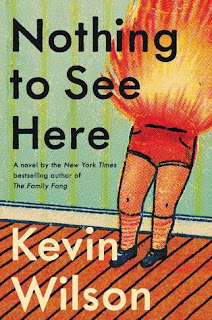
Review and quotes: NOTHING TO SEE HERE


Title:
Nothing to See Here by Kevin Wilson 

Book Beginnings quote: 

In the late spring of 1995, just a few weeks after I turned twenty-eight, I got a letter from my friend Madison Roberts.

Friday56 quote: 

I heard Carl shout, and I turned to see Roland now on fire, though not as bright as his sister. Carl simply kicked him into the pool, where he fell like a rock, extinguished.

Summary: Lillian and Madison became good friends when they attended boarding school together. But when Lillian had to leave school unexpectedly their friendship slipped into a routine of a few letters each year, staying in touch but just barely. So it was surprising when ten years later Lillian received a letter from Madison asking for her help. Madison's twin stepkids are moving in with her family and she wants Lillian to be their caretaker. Caretaker not nanny, why? Well, they need to be protected from themselves since they both spontaneously combust into flames when they get angry or stressed.

Review: I like odd and quirky books and I decided to read Nothing to See Here because this book sounded like it had those qualities in spades. Kids who spontaneously combust? Friends so unequal that one is willing to use the other without thought? I've not read Kevin Wilson's other books, but apparently he is the master of telling the absurd story but making it believable. "He takes the most ridiculous storylines and grounds them in reality with an ample dose of matter-of-factness and sentimentality" (Chicago Review of Books).

As I reflect on the book it seems incredulous that anyone would like it, it is just so absurd. But just like the above mentioned reviewer states, the book is also realistic and sentimental. In fact, as I neared the end of the book I realized I was hooked. The ending was tremendous and unexpected. All the characters grow and learn to love themselves better. That makes it worth the read.

Book Beginnings on Friday is hosted by Rose City ReaderShare the opening quote from current book.
Th
e Friday56 is hosted at Freda's VoiceFind a quote from page 56 to share. 

Visit these two websites to participate. Click on links to read quotes from books other people are reading. It is a great way to make blog friends and to get suggestions for new reading material. 

-Anne

Friday, December 31, 2021

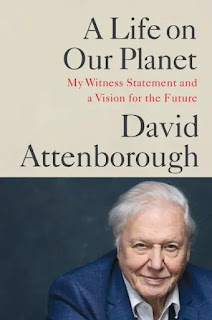
Nonfiction review: A Life on Our Planet: My Witness Statement and a Vision for the Future


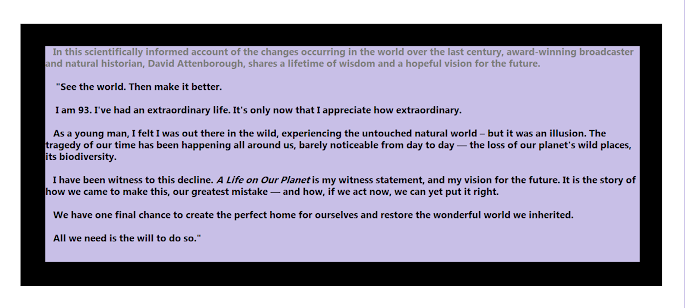
Last year I watched the TV special, A Life on Our Planet hosted by Sir David Attenborough. In the show Attenborough expands on the ideas in his book A Life on Our Planet: My Witness Statement and a Vision for the Future, pointing out all the ways we are killing our planet through our destruction of wild places and lack of biodiversity. Then he gave examples of places making changes that could make a difference if we had enough resolve to see them through.

I was tremendously touched by the show and told everyone I had contact with to watch it.

This year I decided to listen to his audiobook on the same topic, A Life on Our Planet: My Witness Statement and a Vision for the Future, read by Attenborough himself. I almost couldn't do it. It was so depressing to listen to, at least the first part of three. We are in BIG BIG trouble. Our world is giving us big signs that we have reached the breaking point and if we don't act now we may be witnesses to the end of life as we know it, the end of planet earth being able to sustain life.

Whew.

I've known it but hearing it from such an expert, such a witness to what life was like compared to what it is now, it was excruciatingly difficult. I just want to continue living in the world of magical thinking where everything ends 'happily ever after.'

After hitting the listener with the bad news, Attenborough spends the next two parts of the book talking about his vision for the future...doable things we can do starting right now to halt the march to our destruction. Since I'm not looking at a print version of the book I can't cite specific examples for you but many of the examples he used are already being done on a small scale. Attenborough explains ways he sees us doing these on a large scale, a scale where a correction is possible.

By the end of the book I felt a bit of hope. In fact, I wanted to send a copy of the book to President Biden and other leaders around the world. We have got to get on this plan NOW. They are the ones who need to work out the action plans.

Now, here is the thing. You need to read to read this book or at least watch the TV show, "A Life on Our Planet." I know this review is discouraging you and now you don't want to do it, but you must. We all must listen to and heed the advice of David Attenborough now.

(This is my last review of 2021. I finished writing it at 9:14 PM PST on 12/31/21, in the nick of time.)

-Anne

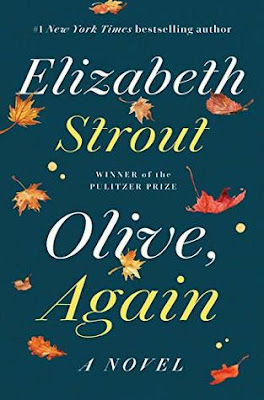
Review and quotes: OLIVE, AGAIN


Title:
Olive, Again by Elizabeth Strout

Book Beginnings quote:


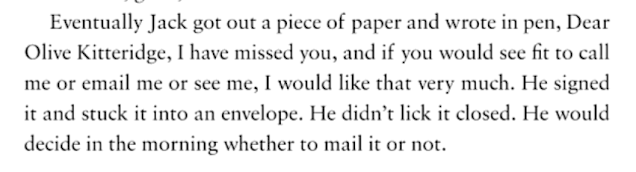
Friday56 quote (from page 21, last page of preview):


Summary: With Olive, Again we re-meet Olive Kitteridge the cranky but somehow lovable character we met back in 2009 in the Pulitzer Prize winning novel by the same name. Both books are collection of stories set in a fictitious town in Maine. Olive Kitteridge is the main character but in many of the stories she is only a bit player, making at least a small appearance. The two quotes I shared today are good examples. The first story in the book is about Jack Kennison but Olive is on his mind, so much so he even writes her a note at the end of the chapter.

Review: Back in 2009 one of my book clubs read Oliver Kitteridge after it won the Pulitzer Prize. In my memory the majority of our conversation centered around whether we liked Olive or not. She is blunt, opinionated, a busy-body, and abrupt yet she is also capable of great kindnesses and making intuitive comments. In Olive, Again we meet Olive after the death of her husband Harry. She is lonely and yet finds time to visit people in the nursing home and is the only person to continually drop by and visit a woman who thinks she is dying from cancer when none of her good friends even call her. At one point in their conversation Olive confesses that she fears she was unkind to her husband and is trying to be a better person now. Strout seems to really understand people and is able to bring them to life on the pages of her books.

Here's the thing about Strout: Her characters endure some awful stuff — spousal abuse, parental neglect, the affronts of aging (including loss of independence and the need for adult diapers), blistering loneliness — but they're resilient. And if even harshly opinionated Olive can learn that a little compassion can change the picture, so can we. "What is your life like, Betty?" Olive asks a home health aide whose bumper sticker irks her. The question is key; it's the first step toward empathy. Olive, Again poignantly reminds us that empathy, a requirement for love, helps make life "not unhappy." (NPR)

Olive, Again is another book club selection (my other book club this time) and I fear we will once again discuss whether we like Olive or not. That may be open for debate but I don't think there will be any debate as to how we feel about Elizabeth Strout and her writing skills. She is a gem and she creates memorable and very real characters. My recommendation is to start with the original, Olive Kitteridge, before you read Olive, Again.

Book Beginnings on Friday is hosted by Rose City ReaderShare the opening quote from current book.
Th
e Friday56 is hosted at Freda's VoiceFind a quote from page 56 to share. 

Visit these two websites to participate. Click on links to read quotes from books other people are reading. It is a great way to make blog friends and to get suggestions for new reading material. 

-Anne

Thursday, December 23, 2021

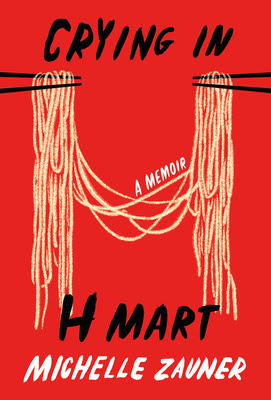
Reveiw and quotes: CRYING IN H MART


Title:
Crying in H Mart: a Memoir by Michelle Zauner

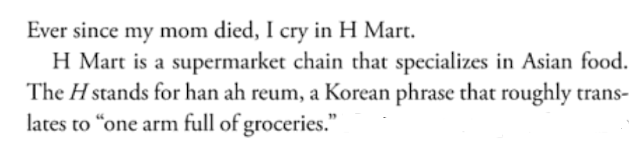
Book Beginnings quote (from page 1):


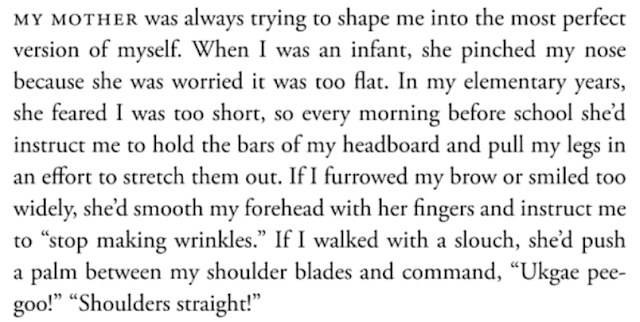
Friday56 quote (from page 18, last page of preview):


Summary: Michelle Zauner, a Korean American, writes about her relationship and memories of her mother who died when Michelle was twenty-five. It was her mother's death that forced Michelle to grapple with her identity or her "Koreanness" which allowed her to "reclaim the gifts of taste, language, and history her mother had given her."

Review: In the second chapter Michelle confesses she rarely remembers the date of her mother's death, but she cannot forget the food her mother cooked and ate. While Michelle is racked with the grief of her mother's untimely death she finds solace in the Korean food her mother fixed but never taught her to make. Michelle had to turn to the Internet tutorials to learn how to cook the food of her childhood. 

Like most people, Michelle's life and relationship with her parents was complicated. She was a rebellious child and caused her parents all kinds of grief. The highlight of her young life were the trips she and her mother to Korea to stay with her grandmother and to spend time with her mother's family every other summer. What she remembers the most of those trips was the food.

It is really obvious food can be one of the love languages. Sharing special food at family gatherings has always been a big deal. When I was growing up I wasn't taught to cook family favorite meals either. I did a lot of baking as a teenager but often that just meant making cakes from boxes or cookies like chocolate chip or oatmeal raisin. When I moved away from home I didn't even know how to make spaghetti sauce or how to cook any meat other than hamburgers. Fortunately for me, my mother is still alive and I have tapped her recipe files over the years. I've actually shared recipes back to my mother that she originally gave me but lost. My husband was taught more cooking skills as he grew up, though looking back, he has a hard time remembering many special meals or recipes that remind him of his parents. Both of us, however, do consider certain meals that we ate often as children as 'comfort food' today -- food we rarely eat, like meatloaf, which is associated with good feelings.

Based on my own experiences with food, family, and comfort I really appreciated Michelle's focus on food as she seeks comfort during her grief. I have never been interested in learning about and tasting Korean food before, but now I certainly do want to try some of the foods she mentioned in the book.

Book Beginnings on Friday is hosted by Rose City ReaderShare the opening quote from current book.
Th
e Friday56 is hosted at Freda's VoiceFind a quote from page 56 to share. 

Visit these two websites to participate. Click on links to read quotes from books other people are reading. It is a great way to make blog friends and to get suggestions for new reading material.  

-Anne

Thursday, December 16, 2021

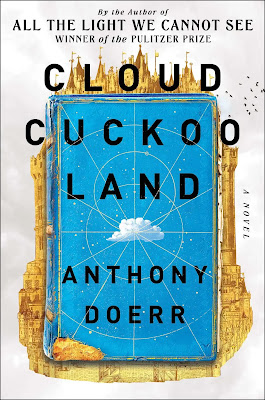
Review and quotes: CLOUD CUCKOO LAND


Title:
Cloud Cuckoo Land by Anthony Doerr

Book Beginnings quote: 

THE ARGOS. MISSION YEAR 65. DAY 307 INSIDE VAULT ONE. Konstance.

A fourteen-year-old girl sits crossed-legged on the floor of a circular vault. A mass of curls haloes her head; her socks are full of holes. This is Konstance.

Friday56 quote:

A WOODCUTTERS' VILLAGE IN THE RHODOPE MOUNTAINS OF BULGARIA. Mid-1400s. Omeir.

The oldest daughter dies of worms, fever takes the middle one, but the boy grows...Twice his mother pays the farrier's wife to travel nine miles upriver from the village to stitch together the gap in the boy's lip with a needle and twine and twice the project fails.

In addition to Konstance, Omeir, there is Anna (CONSTANTINOPLE. 1439-1452), Zeno and Seymore. (LAKEPORT, IDAHO. TWENTIETH AND TWENTY FIRST CENTURY.)

Summary: Yes. The story is told in four+ locations and time periods: in and around Constantinople in days leading up to its fall in 1453; in the mountains of Bulgaria during the same time period; in Lakeport, Idaho starting in the 1940s through 2020; and in a spaceship en route to a possible new land to colonize in the future, 65 years into the mission. What do all of these people throughout time have in common? They all find or interact with a book (codex) called "Cloud Cuckoo Land" written by Antonius Diogenes some time in the second century CE. And that little book made all the difference in the character's lives.

Review: I am not going to tell you more in the summary because this post would be pages long if I did and because I want you to discover the interlocking stories for yourself. Cloud Cuckoo Land is really an ode to story-telling and to the people who preserve those stories going forward. At one point some bibliophile in the book reminds (tells) us how many of the Greek tragedies are lost. “We know that at least one thousand of them were written and performed in Greek theaters in the fifth century B.C. You know how many we have left? Thirty-two.” And of those 32 maybe only a few lines on each page may be legible. In this day and age of the Internet we tend to forget that time and elements have absolutely destroyed important documents from the past.

Cloud Cuckoo Land is, among other things, a paean to the nameless people who have played a role in the transmission of ancient texts and preserved the tales they tell. But it’s also about the consolations of stories and the balm they have provided for millenniums. It’s a wildly inventive novel that teems with life, straddles an enormous range of experience and learning, and embodies the storytelling gifts that it celebrates (NYT). 
And, boy howdy, what storytelling! When one reads Cloud Cuckoo Land they will get caught up in the stories of five people over a huge arc of time. And, as a bonus, the reader will learn a bit about Antonius Diogenes, who was a real person, though he didn't actually write a book named "Cloud Cuckoo Land." I looked it up, wondering at the odd turn-of-phrase. Cloud-cuckoo-land was coined by the 4th century BC Greek playwright Aristophanes in the whimsical and extravagant play, The Birds. And if it is used today, though I've never heard it used, it means "A realm of fanciful or impractical, idealistic notions." 

My husband and I listened to the audiobook together so we had the benefit of each other to ask for clarification if a thread was lost when trying to keep track of five stories. We had to trust that all the stories were somehow connected and that we would eventually understand how. It was a very satisfying experience when the focus became clearer and those connections were revealed. This doesn't often happen but both of us gave the same rating to the book: 5 stars.

Book Beginnings on Friday is hosted by Rose City ReaderShare the opening quote from current book.
Th
e Friday56 is hosted at Freda's VoiceFind a quote from page 56 to share. 

Visit these two websites to participate. Click on links to read quotes from books other people are reading. It is a great way to make blog friends and to get suggestions for new reading material.  

-Anne 


Friday, December 10, 2021

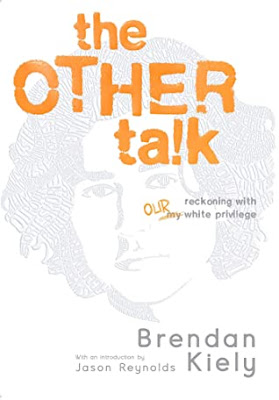
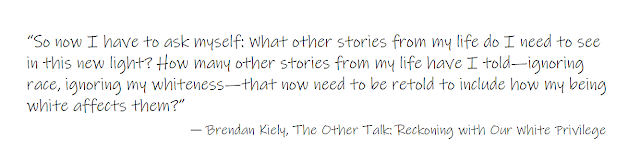
Nonfiction Review: THE OTHER TALK: Reckoning with White Privilege


White people don't need 'the talk" that Black parents feel they need to give their children about how to survive racism. But white people do need "the other talk," though their parents rarely set aside any time to deliver it. This other talk is about taking responsibility for White privilege and doing something about it.

Brandon Kiely, a YA author, got his first novel published at the same time as Jason Reynolds, a Black YA author got his first book published. Because of this timing they were sent out on a book tour together to promote their books. Kiely, who is White, couldn't help but notice all the instances where he and Jason Reynolds were treated differently, often with complete disrespect to Reynolds. A deep friendship formed between the men and they have partnered on writing a book together. His experiences during this book tour were the catalyst for Kiely to start thinking about White privilege in a new way and to start looking for ways that he could make a positive difference toward moving forward the discourse about racism in our country. As he was coming to terms, often uncomfortable terms, with his Whiteness, Kiely became more and more convinced that Whites need to talk to Whites about White privilege and about the ways that people with power “legalized, institutionalized, and systematized racism in America.”

In a lot of ways the book is a memoir because Kiely writes about his own experiences growing up White while comparing them to the experiences of members of the Global Majority (BIPOC). For example, when Kiely was a new driver, he got pulled over for speeding. I was driving 40 miles over the speed limit. Instead of getting a ticket, or getting hauled off to jail, he got a fatherly warning from the police officer, "Go home, be safe, keep your friends safe." We all have heard of contrasting stories where Black teens are pulled over for minor traffic infractions and they end up hauled to jail or worse, shot to death.


As I made my way through The Other Talk I realized that this is the book I've needed to read. As a White person who is trying to become less racists and more antiracist, I've had a hard time fully appreciating the message when it is delivered by a person of color (Global Majority). I also don't think that BIPOC people should have to spend their whole lives trying to make White people see the light.  As I described the book to my Bible Study class, filled with old white ladies like myself, all of them said they wanted to read it. They have been looking for a book to help them bridge the gap in their understanding on the topic of White privilege.

Over a month ago I checked the list of books nominated for the Cybils Nonfiction category. As a second round judge I wanted to get a jump on reading the books that may be chosen as finalists. I am hoping and keeping my fingers crossed that this book is selected as a finalist. It is an important book, one that should be read by teens, its target audience, and adults alike.

I hope you will read it, too. Request it from your library. If they don't have a copy, ask them to buy it. It's that good and even more important that this book gets read by as many people as possible. (BTW-I'm buying a copy for my church library so all those gals  in my Bible Study CAN and hopefully WILL read the book. No excuses.

-Anne

Thursday, December 9, 2021

Review and quotes: TERCIEL AND ELINOR


Title:
Terciel and Elinor by Garth Nix

Book Beginnings quote:


Friday56 quote:


Summary: In the Old Kingdom, eighteen-year-old Terciel is being trained in the art of necromancy by his great-aunt, Tizanael. She is the Abhorsen, he, the Abhorsen-in-waiting. It is their job to make sure that the dead do not come back to life.

Across the wall in Ancelstierre, Elinor is growing up in a very secluded life. Her father is dead. Her mother is a tyrant, and her only friends are her governess and the groom, an old man who used to be a circus performer. When Elinor's mother goes into an odd sleep state between life and death, the governess sends a message to the Abhorsen for help. Terciel is sent in her stead but before he can help the mother, a horror emerges, killing many and burning down the house. This event leads Elinor to learn about her past and her connection to the Old Kingdom.

This book is the sixth in the Old Kingdom series by Garth Nix and it is the prequel to Sabriel, the first book in the series. It is in this book that we meet Terciel and Elinor, Sabriel's parents.

Review: I love The Old Kingdom series, having read the first three books soon after I became a teen librarian, then subsequent books as they were released. Nix is not in a hurry with this series, so often there are long waits between books. But not so long that one forgets the magic of the series. When I learned that Terciel and Elinor was published, I dropped everything and got the audiobook from the library. My daughter, another fan of the series, checked out another copy of the audiobook at the same time. We thought we could pace ourselves and discuss what was happening as we listened, but Carly got way ahead of me and had to wait impatiently for me to catch up before our discussion.

If you aren't familiar with the series, don't start here. Read the series according to publication dates. The stories will not unfold in chronological order but will reveal aspects of the story by jumping back and forth. After finishing this book, my daughter decided to go back and re-read all the rest of the books in the series with the exception of Clariel. It is the darkest of all the books and has no characters that are met in any of the other books.

1. Sabriel (1995)

2. Lirael (2001)

3. Abhorsen (2003)

4. Clariel (2014) -- The beginning; the pre-prequel

5. Goldenhand (2016) -- The ending

6. Terciel and Elinor (2021) -- The prequel to Sabriel


Book Beginnings on Friday is hosted by Rose City ReaderShare the opening quote from current book.
Th
e Friday56 is hosted at Freda's VoiceFind a quote from page 56 to share. 

Visit these two websites to participate. Click on links to read quotes from books other people are reading. It is a great way to make blog friends and to get suggestions for new reading material.   
 

-Anne

Tuesday, December 7, 2021

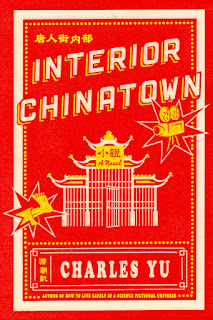
Review: INTERIOR CHINATOWN


Interior Chinatown
by Charles Yu won the National Book Award in 2020 and I imagine that was at least in part because of the format the story was delivered in -- a television script. The story is divided into seven "acts" showing the arc of the life of Willis Wu, a Taiwanese-American actor who keeps getting stuck in the role of "generic Asian man" or "Asian delivery man" when what he hoped for, and finally obtained, was the role of "Kung Fu Guy." Yu splits the script between the interior monologue Willis Wu is having with himself about what is he experiencing and feeling, and the actual script from the TV show "Black and White", a cop show staring Sarah Green, a sexy, white detective, and Miles Turner, her Black partner. If Wu gets any speaking parts on the show he is forced the deliver his lines in a fake Asian accent. But that isn't as bad as when his character dies because "...it sucks to die. The first thing that happens is that you can't work for forty five days." Willis Wu is tired of being a nobody. He wants to be the protagonist of a story, of his story.

There is little distinction between the TV script and real life. When Willis Wu is not being generic Asian guy he lives in a SRO -- single room occupancy-- above the Golden Palace Restaurant, filled with actors who are Koreans, Japanese, Chinese, Vietnamese, all lumped together in a variety of roles like generic Asian man with no distinctions for their actual nationalities. Interior Chinatown, in a lot of ways, is an indictment of Hollywood and it's penchant for treating all Asians according to tired racial tropes.

The most impactful part of the story for me was the courtroom scene where Willis is being tried for being missing. His lawyer, 'Older Brother' shocks Willis and others by making the defense about history -- all the instances of racial discrimination against Asians. He questions Willis as to why Asians have been in America for over 200 years, yet they always seem like they just arrived. He also accuses Willis of thinking that this discrimination isn't as bad as what the country has done to the Blacks, so he is not even worthy of first rate outrage.  Kelsey Chen writing for the Harvard Crimson, puts it this way:

These feelings — of suffering a “second-class oppression” — have caused Asian America to cause our own disappearance from the American political landscape. But Yu makes it clear that this message is not an argument that Asian America’s deafening political silence and activist deference to the supposed master racial narrative of black/white antagonism is solely because of external, systemic pressures. As Willis realizes, “[We are] guilty .... Guilty of playing this role. Letting it define me.…By putting ourselves below everyone, we’re building in a self-defense mechanism. Protecting against real engagement.”

I listened to the audiobook of Interior Chinatown expertly narrated by Joel de la Fuente. (And here I am making a racist confession so please forgive me) -- As I listened, I wondered why the publisher would select a non-Asian to read the part because, wait for it, Joel de la Fuente didn't sound Asian. Groan. Isn't that awful? I fell into the racist trope I was trying to elude. (Joel de la Fuente is Asian American, by the way. What was I expecting? A cheesy accent? A more Asian-sounding name?) The audiobook is only 4 hours and 20 minutes long, proof that the the text of the book was really designed like a TV script. So clever.

In the week since I finished the book the truths within it have hit me in waves. I am 100% convinced that the reason this book won the National Book Award and deserves wide readership isn't because of its format, but because it exposes a deep, deep truth about racism in America. Fortunately for the reader it is entertaining, and often funny too, softening the blow. I highly recommend it.

-Anne

Friday, December 3, 2021

Review and quotes: MATRIX


Title:
Matrix by Lauren Groff

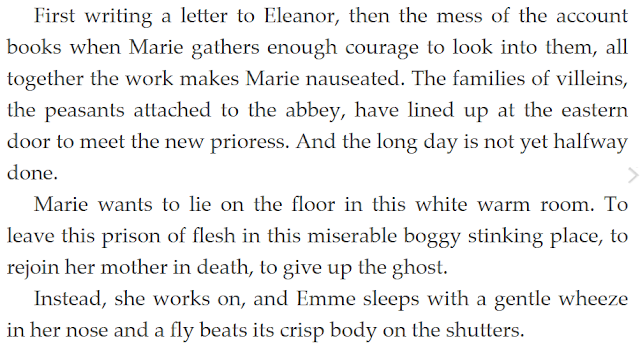
Book Beginnings quote:

Friday56 quote:


Summary: Matrix introduces the world to a real feminist-poet nun, Marie of France, who lived during the reign of Queen Eleanor in the 12th century. She is the first known female poet from France. Groff takes the tiniest morsel that is known about Marie's life -- a letter in poem form that she wrote to Queen Eleanor asking to be returned to court, away from her banishment to a rundown abbey in England -- and builds a world where women can take care of themselves and wield the power they need to not only survive but thrive.

Marie of France was sent, at age seventeen, to be the prioress of a crumbling abbey filled with aging, sick nuns. She wallows in her grief for a brief time then sets about to remake the abbey into a space where women could do all the things that men usually do and be protected from them at the same time. Groff imagines Marie as a tall, Amazon-type woman who can bend the wills of all who come in front of her yet who loves her nuns as a mother loves her children -- fiercely and passionately. The title of the book, Matrix, sounds like something sci-fi but it is actually from the Latin for mater which means 'mother.'

Review: I decided to read Matrix when it ascended to the 2021 National Book Award finalists list. I know nothing about this time period except a tiny bit about the Crusades, which are also mentioned in this book. Eleanor of Aquitane was also a mystery to me, though there is quite a bit of information about her reign in both France and England.

Everything I read about the book mentioned the fantastic writing and the 21st century twist Groff gave to Marie. I liked the book for the plausible peek at what life was like in monasteries long, long ago. I also enjoyed what a kick-ass person Groff made Marie of France into.  I recognize that this isn't the book for everyone but if you enjoy reading historical fiction or know someone who does I recommend this book to you/them.

Book Beginnings on Friday is hosted by Rose City ReaderShare the opening quote from current book.
Th
e Friday56 is hosted at Freda's VoiceFind a quote from page 56 to share. 

Visit these two websites to participate. Click on links to read quotes from books other people are reading. It is a great way to make blog friends and to get suggestions for new reading material.   
  

With this review I have completed my personal task of reviewing a bunch of past-due reviews. Of course in the meantime I have finished several new books so I am still behind on my reviews, but I'm closer than I was at the time I made the personal blogging challenge. See this list and hyperlinks to the reviews here.  -Anne

Wednesday, December 1, 2021

Nonfiction Review: ON TYRANNY: Twenty Lessons From the Twentieth Century


I read ON TYRANNY: Twenty Lessons From the Twentieth Century by Timothy Snyder in October after Rachel Maddow highlighted it while interviewing the author. This version, the graphic edition illustrated by Nora King, had just been published and I determined it was a format I could deal with while attempting to cope with a difficult subject. 

I am one of those people who has a really hard time ignoring troubling news and that means that the last two years have been tremendously hard on me. What with 1/3rd the US population (a number I've made up) believing that Trump won the election but had it stolen from him, 1/4th (also made up by me) the population thinking batshit medicine is better than taking a vaccination to prevent the spread of the COVID-19 virus, and whole bunch of Trump-type followers thinking that democracy needs the heave-ho in favor of an authoritarian ruler in our country. It is as if they think anything is better than having a Democrat in power. I knew this book wouldn't be an easy read for me.

Timothy Snyder is a professor of history at Yale University and a scholar of the Holocaust and of fascism. His book On Tyranny was published in 2017, written in the aftermath of Trump's 2016 election and inauguration, to highlight the atrocities taken by Hitler and Stalin in the 1930s and draw some parallels to what he was seeing in our country. He decided to publish a graphic edition and rework some of the material to include the 2020 election because "Trump may be out of the White House now, but the forces that sent him there have hardly disappeared from public life" (New Yorker).


The book is divided up into twenty lessons. Each lesson is a chapter long, starting with 1. Do Not Obey in Advance and ending with 20. Be As Courageous As You Can. Hopefully you can read the rest of the titles of the Table of Contents in the above photo. (If you click on the photo, I think it is made larger.) The first chapter begins with this statement: Most of the power of authoritarianism is freely given. In times like these, individuals think ahead about what a repressive government will want, and then offer themselves without being asked. A citizen who adapts in this way is teaching power what it can do. Snyder goes on to explain how this happened in Germany and Austria prior to WWII. In 1938 when Hilter was thinking about annexing Austria, Austrian 'anticipatory obedience' went right along plans against Jews and cinched their fate.


Each chapter built on the last and each chilled me to the bones -- the similarities of what was happening in Russia and Germany in the 1930s with what is happening today in America both astonished and depressed me. I had to talk to someone about what I was reading/learning. It didn't take me long to read the book which had lots of graphics and fewer words than a normal book and once I was finished I turned to my husband and asked him to read it so we could discuss it. He tried but the format didn't appeal to him. He had trouble with the handwritten text and the mixture of illustrations/photos with text interspersed throughout. (See examples above and below.)

In the illustration above we see the transformation of Hillary Clinton into a monster. This is part of the totalitarians play-book and is part of the four steps of how truth dies (pgs. 58-62). "Step 1- Open hostility to verifiable reality, which involves presented inventions and lies as facts. Step 2- Saying incantations over and over. Repetition creates "truth." So "Crooked Hillary" or "Sleepy Joe" become mantras and start changing perceptions of the masses. Step 3- Is magical thinking or the open embrace of contradictions. 'The vote is rigged but vote for me anyway.' Step 4- Misplaced faith. 'I alone can fix this.'" Ask yourself, does it feel like truth is dying? Do you wonder how so many people can go along with this kind of nonsense? Me, too!

So here we are living in the 1930s 2020s and it is impossible to understand how all this can be happening again. But I haven't lost hope. There are so many good people working to counterbalance the nonsense and as for me I will try to work up to number 20 and be as courageous as I can to help tip the scales back in the right direction.

-Anne

Tuesday, November 30, 2021

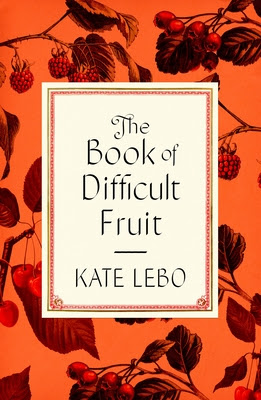
A short nonfiction review: DIFFICULT FRUIT: ARGUMENTS FOR THE TART, TENDER, AND UNRULY (WITH RECIPES)


Nonfiction November comes to end today and so I am in a swirl of activity trying to finish up reading several books and, if I can manage it, writing reviews for them. The Book of Difficult Fruit was an odd choice for me to make this month. Actually it was an odd choice for me to make any time. I am a fruit lover (who isn't?) but I pretty much stick to what I know and don't branch out much when it comes to fruit selection. Growing up in the Pacific Northwest I'm used to seeing berry bushes everywhere. But because of this abundance I've been warned my whole life not to stick anything in my mouth unless I was absolutely positive it wasn't poisonous. Who knows about those little read berries on the bush in my own backyard. Leave them alone is my motto. It is also not uncommon to see old apple trees with rotten fruit on the ground beneath them. So why should I be drawn to a book about not just any fruit, but difficult fruit? I honestly can't remember why this one ended up on my TBR list. But here I am reviewing it for you after admittedly a not-very-close reading of it.

Kate Lebo is the author of a cookbook, The Pie Book, and several of the fruits in the book are made into pies at the end of her chapters, which makes sense. There are 26 fruits highlighted which conveniently coincide with the letters of the alphabet, starting with Aronia and ending with Zucchini. For each fruit (and some non-fruits) Lebo tells the reader where one can find it, how it is to be gathered, and how it can be used. This includes medicinal purposes, if any exist. If she was able to find historical references to the fruit she included that information, too. Lastly, each chapter ends with two recipes using the fruit. Not all recipes are for food. For example, aronia can be made into a dye for paper or cloth and Yuzu can be used in body oils and balms.

Though I found the information of the different fruits interesting I didn't find it THAT interesting so I would speed read through sections, especially those where obtaining the fruit seemed unlikely or impossible for me.

I hadn't heard of several of the fruits included in the book: aronia, durian, faceclock, medlar, yuzu. As it turns out I had heard of faceclock, I just call it dandelion greens. Those and several of the foods listed are NOT fruits: rhubarb, sugarcane, vanilla, xylitol, and zucchini, but who is being picky. I actually found most of the chapters enlightening and sometimes quite funny.

While Kate Lebo was telling us about her attempts at cooking we also learned a few things about her life and her relationships. With a few more details we could even call this book a memoir.

If you are a foodie or just enjoy reading through cookbooks or learning about new foods, this is the book for you. If you like to experiment with new foods, even if all you do is munch them as you hike, you might find some good ideas in Difficult Fruit. For the rest of you, I'd say try something else, or plan on skimming your way through this one, like I did.

-Anne

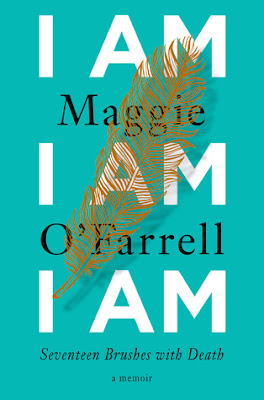
Nonfiction review: I AM, I AM, I AM: SEVENTEEN BRUSHES WITH DEATH: A Memoir


After reading Hamnet by Maggie O'Farrell earlier this year I knew I had to read more books by the same author.  I loved the writing in that book so much, I was ready to stay in the Shakespeare's world that O'Farrell created forever. After a brief amount of exploration I settled upon reading O'Farrell's memoir because the title was so unique: I AM, I AM, I AM: SEVENTEEN BRUSHES WITH DEATH: A Memoir. I knew the "I am, I am, I am" came from Sylvia Plath's Bell Jar but what really intrigued me was the "Seventeen Brushes with Death" part. 

The memoir, not told in chronological order, starts off with a bang, too. O'Farrell at eighteen escapes being murdered after a chance meeting with another hiker. She is haunted to this day by the "what if" of that situation, as I imagine I would be also. And so begins her march through various diseases and accidental close calls. As she recounts her near misses we learn about a restless girl who craves movement above all else. Her stories all circle around the biggest and worst close call -- a case of encephalitis at age eight which caused her to lose all muscle use, having to relearn everything (walking, writing, feeding self) after she recovered from the disease. Her survival was not assured, in fact, medical professionals felt she would likely die from the disease. Looking back she felt lucky that she did, instead of unlucky that she was so sick for so long. In the end she shares the story of her daughter who is so severely allergic to nuts, seeds, and eggs that the merest hint of any of them can cause anaphylaxis and potential death.  Like all loving parents, she wishes she could take this burden off her daughter and shoulder it herself.

After finishing the I Am, I Am, I Am audiobook, expertly read by Daisy Donovon, I wanted to live inside the story for longer. I wanted to go on learning about O'Farrell's life, just like I wanted to learn more about Shakespeare's life in Hamnet, as long as O'Farrell was telling the story. What an amazing writer! I highly recommend this book.

I'm guessing this is natural but it seems like an odd thing to say -- I couldn't help thinking back over my own life as I listened. Have I had any brushes with death? I can think of four possibles: two involving water and current, one involving a tree, and one, and this tale I tell for the humor of it, I was chased by a moose and I knew if she got to me I was a goner. That's it. No deadly diseases, precarious accidents, or potential murderers for me. When I asked my husband, his story was quite different. He was a rambunctious kid and nearly died of accidents of his own making at least twice, was in a rollover accident as a passenger in a car, had several near misses when he worked as a logger, and then he went to war in Iraq and every day worried about his safety. Eek. Several of the stories were news to me as he told them over our lunch of ham sandwiches. Maybe O'Farrell is correct. We all have our own near death stories to recount if we are willing to take a look back on them.

-Anne

Monday, November 29, 2021

Nonfiction review: WITHOUT YOU, THERE IS NO US

Six or seven years ago my husband and I attended the Search for Meaning book conference put on by Seattle University. Each author's offering had something to do with equity or ways for the reader to further understand and appreciate their neighbors worldwide. At this conference my husband and I both attended the workshop conducted by Suki Kim, a journalist who had recently published a book, Without You, There Is No Us: My Time with the Sons of North Korea's Elite. After her session we purchased this book and stood in line to get Kim's signature. At the time I had the best of intentions to start reading as soon as I got home. Well, six years later I finally got around to it, in part because Helen at Helen's Book Blog announced she would be reading the book for Nonfiction November and I approached her about doing a read-along. We decided to read it together, five chapters at a time, using our Goodreads message in-boxes for our discussion. It worked super well and I enjoyed the read-along and discussion very much. 

Suki Kim, a Korean-American, was born in South Korea and had relatives who were trapped in what became North Korea after the Korean conflict truce divided the two at the 38th parallel. She wanted to know more about North Korea but would only get a sanitized view of the country when she visited it a few times under heavily scrutinized trips. She wanted to learn more about what it was like to live in the most closed-off country in the world so she applied to go teach at a college, Pyongyang University for Science and Technology (PUST), supported by a church. In order for her to be accepted for this volunteer position she had to pretend to be a missionary herself, someone doing this work with an eternal goal in mind. So for six months she lived and worked among the 240 males students, all sons of North Korea's elite. What she discovered about these boys and the country in general was both eye-opening and disheartening.

After reading the first five chapters of the book both Helen and I seemed hopeful that the Kim's experience with the Korean boys would provide a breakthrough for them. Helen said, "I feel like we are on the cusp of students taking chances, opening up a bit, etc. but it makes me nervous for them, which is the sign of a good book. I feel invested in what happens." She was right to feel nervous for them because everything anyone did was scrutinized. There were 'minders' everywhere and it was assumed that they were spying on every interaction the boys had with their teachers. Kim and the other teachers had to be very careful what they said. Who knows what kind of punishment the boys would receive if they were caught in some illegal act or thought?

I was struck by how childlike the boys were. Imagine what American college students are like, then think of those same boys as ten-year-olds. The North Korean boys were so naive and child-like. They were more like the the ten-year-olds than the American college students. "For example," I said in my discussion with Helen, "the birthday party where they sang friendship songs for several hours and teased the boy who has never even been near a girl yet he thinks himself a Romeo." Later in the book, Suki Kim refers to how much she loves the boys, which struck us as really odd since we are both secondary teachers and we will talk about liking our students but never use the word 'love' about them. My sisters, both elementary teachers, do talk about loving their students. Helen and I decided that this is more proof of how childlike these boys were.

Helen starts the discussion on our next section with the topic of lying. "And the lying is fascinating. It would breed such distrust on the part of the author/teachers, but to the students, it seems accepted and something they all do, perhaps to save face?" Lying was so common Kim wondered if the students even knew it was wrong. How could they? They lived in a country where the Great Leader, Kim Jong-il supposedly was the foremost expert on every subject? He also has hit the most hole-in-ones in a single golf game, and knows all there is to know about growing apples. The regime has so locked down the country the boys have no way of checking to see if 'facts' are really true or not. Here they are attending a Science and Technology school without even the most basic Internet available to them.

Our American brains find it hard to imagine someone living under such a repressive regime not pining for freedom inwardly. But after reading the next section we wondered if the indoctrination of the people was complete, if by some miracle North Korea opened up, would these people be able to shake it off?  I laughed at first, about the example Kim used when she described kids singing the beautiful song which devolved into: "burning hatred in our hearts", such brutal words coming out of angelic mouths" (150). How can that type of repression be overcome? How could these N. Korean boys ever escape from the clutches of this regime since their whole life has been about worshiping the dictator? 

Speaking of singing, there was a lot of singing done by the boys and others in the country. Apparently almost all of the songs they sang had something to do with the Great Leader or how wonderful their country was. In fact the book title, "Without You, There is No Us," comes from a patriotic song extolling the virtues of The Great Leader, Kim Jong-il.

As we read on both Helen and I were struck by how tedious existence in North Korea was for the both the students and the teachers. There was little to do outside of studying (students) and lesson-planning (teachers.) Kim knew that her email was being monitored so dared not write messages home that would be seen and viewed negatively. Field trips to cultural sites always seemed creepy and staged. For example one museum held items that were given to the Great Leader by other world leaders. A guided tour of these items ended abruptly when it was time to go into the next room. The teachers were herded back on to the bus without an explanation. There were never explanations.

The bleakness of the place is astonishing. Kim said, " Being in North Korea is profoundly depressing. The sealed border was not just at the 38th parallel, but everywhere, in each person's heart.. I was becoming convinced that the wall between us was impossible to break down..." And in chapter 27 she gets a sense that the boys are as fed up and stifled as she is. "Every day is the same. / Every day is about waiting. / I am fed up."

As the end of Fall semester approaches Kim is approached often by her students, wondering if she will return in the Spring. She never tells them no, she just demurs. Are the liars being lied to? Kim never said she wanted to come back but was she willing to go through another term of loneliness and boredom for more writing material? I doubted it. But it all became a moot point because two days before she was scheduled to go home for Christmas, Kim Jong-il died and the whole country went into a spasm of grief.  Suki Kim and all the teachers left without so much as a goodbye to any of their students who were all embroiled in their own pain and grief. It was a sad way to end her tenure in North Korea.

I would have liked an 'Afterward' so we could know what happened after Kim got home. Helen agreed. The book ends when she leaves North Korea. I suppose the Afterward is the book and the reflections she is able to make about her experiences only after she has some distance from them. 

If you've never done it before, I recommend nonfiction books for a read-along. I got so much out of my discussions with Helen which allowed me to enjoy the experience more. Thanks, Helen, for joining me on this reading adventure.

-Anne

Thursday, November 25, 2021

Review and quotes: TRANSCRIPTION by Kate Atkinson


Title:
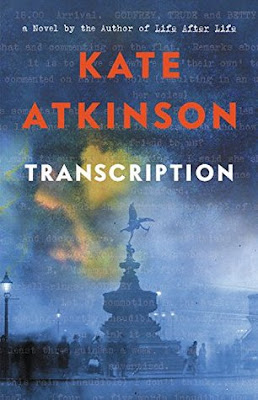
Transcription by Kate Atkinson

Book Beginnings quote, page 1:


Friday56 quote, page 23 (last page of preview):


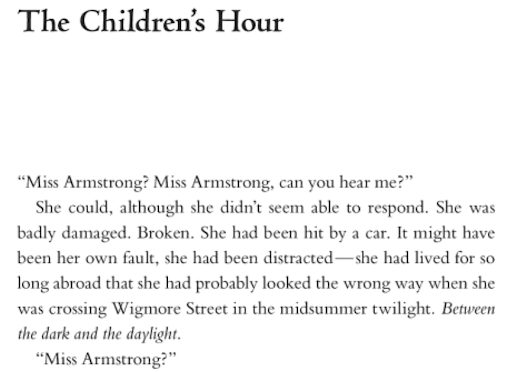
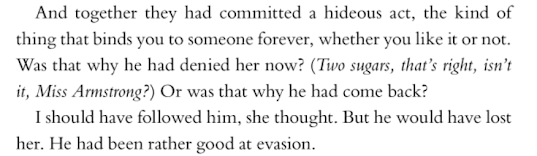
Summary: In 1940 an eighteen-year-old Londoner and recent orphan, Juliet Armstrong, is recruited to work as in the world of espionage, spying for MI-5 on her own countrymen. After an initial training she is tapped to do transcription work from recordings made of meetings with British Fascist sympathizers. Later she infiltrates these groups posing as a sympathizer herself. The work was both tedious and extremely terrifying by turns. Once the war is over Juliet settles into a life working for the BBC as a programming engineer. One day about five years later she inadvertently bumps into one of the other spies and he acts as if he doesn't know her. This chance meeting causes her to realize that one can never really leave their past behind and very soon finds herself embroiled again in espionage activities.

Review: My husband and I recently listened to the audiobook of Transcription by Kate Atkinson. We both enjoy listening to mysteries and this book had plenty of them. The story of Juliet's life was not told in a liner fashion. The reader learns about aspects of her live in little dribs and drabs and the story moves back and forth in time to pick up and highlight new information. The first quote is about the end of her life. So we begin at the end. The second quote (from page 23, not page 56) is from the part of the story right after Juliet sees one of the spies she worked with during the war who won't acknowledge that he knows her.

The pacing of the book was uneven. There were rather dull parts where the action was focused on the waiting and the typing of the transcripts. Not very thrilling stuff. Then there were frenzied moments of action and almost throbbing tension. I suppose that was intentional since that is probably the life of someone who is doing surveillance. There are several plot twists, including a big one near the end of the book so the reader is kept on her toes throughout. 

The author's notes gave me insight into the realism of this plot. Atkinson talked about the research that she was able to do about the espionage that was conducted on fellow Brits throughout the war, trying to fight Nazism at home.

This is a book club selection. These discussion questions, provided by the publisher, seem very good and should force to dig deep to answer them. In a lot of ways the book is a timely reminder of how awful the Nazis were and what it means to be a fascist. 

Book Beginnings on Friday is hosted by Rose City ReaderShare the opening quote from current book.
Th
e Friday56 is hosted at Freda's VoiceFind a quote from page 56 to share. 

Visit these two websites to participate. Click on links to read quotes from books other people are reading. It is a great way to make blog friends and to get suggestions for new reading material.   
 

SOTH Book Club, Dec. 2021

-Anne
Saturday, November 20, 2021

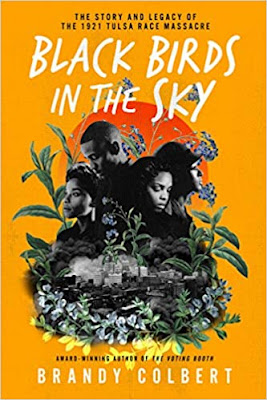
Nonfiction Review: BLACK BIRDS IN THE SKY: The Story and Legacy of the 1921 Tulsa Race Massacre


Long covered-up historical events which place a negative focus on white supremacy are coming to light. The truth about aspects of our dark history are revealed in BLACK BIRDS IN THE SKY: The Story and Legacy of the 1921 Tulsa Race Massacre by Brandy Colbert. The Tulsa Race Massacre was not only an attack on a community of people, but also part of the greater record of violence against Black Americans. 

The attack on the Greenwood district of Tulsa by a white mob was sparked by an alleged attack of a white girl by a black boy. However this attack, which destroyed a thriving community sometimes called the Black Wall Street, was just an inflection point to a simmering atmosphere of brutality. Colbert not only highlights the events which immediately led to the May 31, 1921 attack but also many aspect of our nation's history, starting the formation of the state of Oklahoma and the displacement of indigenous tribes to lands near what became Tulsa and the succession of discriminatory laws passed after Reconstruction. Topics like lynching, formation of the KKK, and discrimination in housing were covered in this book as well as other horrific events that occurred close in time to the Tulsa Massacre, like the Elaine, Arkansas Massacre where hundreds of blacks were killed for daring to consider forming a union.

I'm sure by now you have heard of the term 'White Fragility.' Well, this book was stuffed full of the horrors that Black Americans endured throughout our history. So full, in fact, that I found myself cringing. It was so graphic and the picture so complete I felt myself wanting to look away. I felt guilty by mere fact of my own race, white, and the horrors that were conducted 'in my name.' I recognized what was happening and tried to stay present and open to learning and growing. How can I be a better ancestor if I don't want to acknowledge the pain of our past (and present)? But I confess it was tough and is probably the reason I didn't read this book very fast, often pushing it off to the side preferring to read something a bit more lighthearted. 

I found the last chapter, "The Legacy of Greenwood", and the Afterward quite helpful for my understanding. For decades the Tulsa Race Massacre was a taboo subject in schools. Why? Julian Hayter, a historian and professor at the University of Richmond, explains that the school curriculum "was never designed to be anything other than white supremacist, and it has been very difficult to convince people that other versions of history are not only worth telling. They're absolutely essential for us as a country to move closer to something that might reflect reconciliation but even more importantly, the truth" (187).

Colbert, interestingly, addresses the COVID-19 pandemic in her Afterward, comparing it with the 1918 Influenza Pandemic. Why does history seem to keep repeating itself? She says, "One question I keep coming back to as I think about these two deadly pandemics: Is history bound to repeat itself no matter what, or does it repeat itself because so many people don't want to look to the past to see how we got to the future?" (192) She went on to talk about what is happening in our country around the divisiveness of politics. Even though Biden won the 2020 election she was shocked by how many people were willing to vote for Trump, someone who had done so much damage the country's democracy, reputation, and integrity. She believes this is because people do not know their history. Citing surveys recently completed, 63% GenZ and millennial respondents didn't know that six million Jews were killed during the Holocaust and 36% thought the number was two million or less were killed. 48% couldn't name one single concentration camp (201).

Clearly we have to do a better job educating our youth about our history -- covering both the good and the bad aspects. This book is a great place to start. 

The title of the book has me intrigued. I looked up what 'black birds' means. One source said, "The symbolic meaning of blackbirds is eternally linked to the "dark vs light" phases of the moon. The bird is symbolic of life in the heavens (higher ideals, higher path of knowing) and the color black is symbolic of pure potential." I like that -- black is symbolic of pure potential. One message of this book is certainly there is potential for positive change. Let's all push for that!

-Anne
Friday, November 19, 2021

Tanka-poetry Book Reviews


Thanks to Lark Writes for giving me the inspiration to write short, poetic book reviews. Hers are called 'Haiku Reviews.' I'll make mine a little longer and call them tanka-poetry reviews. Similar to haikus, tanka poems are short, using only 31-syllables in the cadence pattern of 5, 7, 5, 7, 7. I'm catching up here on past-due reviews.


The Painted Veil by W. Somerset Maugham
(Vintage, 2006; originally published in 1925)
 
Love-starved Kitty Fane
Lives in Hong Kong with husband.
After an affair,
they move to cholera zone.
She learns to love and forgive. 

4 stars


The Legend of Auntie Po by Shing Yin Khor
(Kokila, 2021)

A graphic novel.
Mei re-imagines the myths
Of Paul Bunyan, starred
By a Chinese heroine.
Set in logging camp of old.
 
3.5 stars


Mary Jane by Jessica Anya Blau
(Custom House, 2021)

Coming-of-age tale,
'70s in Baltimore.
Mary Jane nannies.
Family hiding rock star.
Summer changes young girl's life.

3 stars


Prince Caspian
by C.S. Lewis
(Macmillian, 1969; originally published in 1951)

The four Pevensie
kids return to Narnia.
Meet Caspian, fight Miraz,
Restore order and magic
Helped by Aslan the Lion.

4 stars
2nd book in series

-Anne