"Outside a dog a book is man's best friend, inside a dog it is too dark to read!" -Groucho Marx========="The person, be it gentleman or lady, who has not pleasure in a good novel, must be intolerably stupid." -Jane Austen========="I don’t believe in the kind of magic in my books. But I do believe something very magical can happen when you read a good book."-JK Rowling========"I spend a lot of time reading." -Bill Gates=========“Ahhh. Bed, book, kitten, sandwich. All one needed in life, really.” -Jacqueline Kelly=========

Thursday, May 5, 2022

Review and quotes: GOOD ENOUGH


Title:
Good Enough: 40ish Devotionals for a Life of Imperfection by Kate Bowler and Jessica Richie

Book Beginnings Quote: 

(PREFACE) If you check your social media feed, the debate has been settled. Yes, you ca be perfect. Other people are living beautiful, joyful, effortless lives. In fact, it's embarrassing that you haven't joined their ranks.

Friday56 quote: 

(FOR THE EXILES) There is a saint for almost everything. Fishermen. Hairdressers. Carpenters. Ecologists. Schoolgirls. Lost articles. Housewives. And an obscure Italian teenager who stands in for all those who feel excluded. Saint Rose was born in thirteenth-century Italy and her astonishing career as a saint began at age three when she raised her aunt from the dead.
Summary: So often devotional books are just another book which ends up inadvertently making you feel worse about yourself because you can't even make yourself complete the whole book on the schedule it proposes, let alone read all the scriptures, pray all the prayers, become more pious or holy. Good Enough is written gently and with humor. It grants permission to all those who need to hear that there are some things you can fix -- and some things you can't. And it is okay that life isn't always better. It encourages readers to read those devotions that speak to them in their circumstances now and skip over those that don't. It encourages readers to pause and reflect, to do what is possible for the day. Each short devotion is accompanied by either a related prayer or a blessing and a "Good Enough Step", which is some small thing that can be done that day which may be helpful or meaningful.

Review: My mother gave me Good Enough in late March. It is considered a Lenten devotional. Lent is the 40 days leading up to Easter. Each year Christians are asked to spend these 40 days doing things or avoiding things in order to prepare one's heart for Easter morning. My mother's church encouraged reading Good Enough this year and both she and my sister had found it so helpful and meaningful, they wanted others in the family to read it, too. Then tragedy struck our family when my cousin's daughter's husband, a Sheriff's Deputy, was killed in the line of duty. It was when the family gathered for the service and the meal that preceded it, that Mom passed out the books to everyone. I was busy being hostess and didn't really hear what she said about the book but found, days after everyone left, that it was just exactly what I needed -- a kind and gentle devotional that reminded me of God's love and his presence even in light of terrible circumstances. The twelfth devotion was on grief. It could have been written for our family. The chapter, 'For the Exiles' (Friday56) was directed to those of us who often feel excluded or underappreciated. Another chapter talks about how it is okay to be mediocre at doing certain things. There was an overarching theme throughout the book that no one is perfect and we can make ourselves very sick if we try.

Though Good Enough was especially written with Lent in mind, only one of the devotions specifically mentioned Easter, so it could easily be read any time of year or over and over again which is what I plan to do. It is easily the best devotional guide I have ever read and it came along at just the right moment to provide some needed salve to soothe what ailed me -- deep grief.

Book Beginnings on Friday is hosted by Rose City Reader. Share the opening quote from current book.
Th
e Friday56 is hosted at Freda's Voice.  Find a quote from page 56 to share. 

Visit these two websites to participate. Click on links to read quotes from books other people are reading. It is a great way to make blog friends and to get suggestions for new reading material.  

-Anne

Tuesday, May 3, 2022

Let's discuss: TBR lists!


This month I have set myself a little goal to read exclusively off my TBR (To-Be-Read) list, without cheating and adding any new ones along the way. My hope is I can actually make a small dent in my  metaphysical list, which I keep track of on Goodreads. 

So, let's talk about reading lists.

Where do you keep track of what you want to read? 

I have a 'to-read' list on Goodreads which has about 210 titles currently residing there. I recently culled the list down but then added a few new books, which meant I really didn't cull it down at all. I also have a Classics Club list of around 30 books which I want to read but I never seem to get to.  In addition, I have book shelves full of books I technically want to read yet I haven't added them to my Goodreads list because, I actually don't know why.

How often do you cull down your list or do you?

A blogging friend recently told me that she has over 1000 books on her TBR list. Mine could probably be as long but I often go through and delete titles usually because I can't remember why I added it onto the list in the first place. I even been known to add the title onto the list more than once (different editions) so the culling process helps me locate and delete dups. I've also asked myself the questions "Do you still want to read this book? Why or why not?" If the answer to the first question is no or I don't know, I delete it. Often books go onto the TBR because someone on a book blog suggested it then it comes off because someone on a book blog hated it. Ha! Fickle me.

Who/What influences you to add books to your TBR?

There are a few authors whose works I will immediately add to my reading list without even reading the reviews first, but not many. And I am usually the last to know when a new book gets published since I do not make any attempt whatsoever to read ARCs (advanced reader copies.) I'm in two book clubs so titles of upcoming books are added as we make new selections. And at the end of each year I tend to scour people's 'best of the year' lists and will usually do a bit of research before adding titles, but these are usually the books I try to read soon in the new year if I can. Otherwise, I read book reviews when I see them and add books that sound like me or those that have piqued my interest.

How influential is your TBR in your decision of what to read next? 

I'd say my TBR is more likely to assist me in placing holds at the library than anything else. I rarely look at it when I am making a decision what to read next, though I often consult it to remind myself that I should make my selections from it. Even saying this makes me wonder if keeping a TBR is futile. I want to read the next shiny book to cross my path or the one which jumps into my hands as I walk across the library. Reading for me is pretty haphazard.

Join in the discussion about reading lists by making your comments below. Help me figure this thing out!


-Anne

Monday, May 2, 2022

TTT: One-Word Reviews


Top Ten Tuesday: One-Word Reviews for the Last Ten Books I've Read 

Note: April was National Poetry Month so many of my most recent reads are poetry books so I skipped over a few of them to retain your interest.


Good Enough: 40ish Devotionals for a Life of Imperfection
by Kate Bowler and Jessica Richie

INSPIRING

*****


A Horse and His Boy by C.S. Lewis

ADVENTURESOME

*****


The House in the Cerulean Sea by T.J. Klune

MAGICAL

*****


100 Poems to Break Your Heart by Edward Hirsch

HARD-WORK

*****


Home Body by Rupi Kaur

RELATABLE

*****


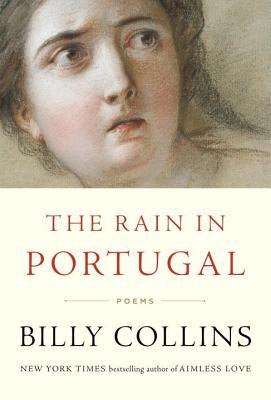
The Rain in Portugal: Poems by Billy Collins

WHIMSICAL

*****


The Pioneers: The Heroic Story of the Settlers Who Brought the American Ideal West by David McCullough

BORING

*****


The Secret Garden by Frances Hodgson Burnett

NATURE-FULL

*****


Ten Poems for Difficult Times by Roger Housden

JUST-WHAT-I-NEEDED

***** 


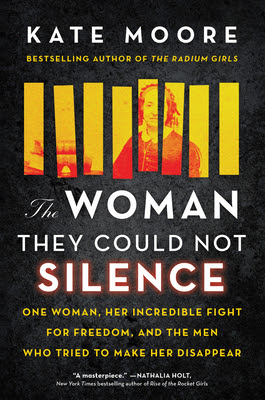
The Woman They Could Not Silence: One Woman, Her Incredible Fight For Freedom, and the Men Who Tried to Make Her Disappear by Kate Moore

EYE-OPENING

*****


-Anne

Sunday, May 1, 2022

Sunday Salon with some bookish and not-so-bookish thoughts

Tulips. April 2016.

Weather:
Overcast but no rain so far today. We seem to be moving toward more spring-like weather. The spring so far has been quite cool.

National Poetry Month ends: How did I do on my poetry reading goals? See this post for my plan for April and poetry.

Bookish thoughts: All month I've been aware that I keep adding more books to my TBR (To Be Read) pile than I actually read. I recently culled down my TBR to right around 210 titles.  (Check out my TBR at Goodreads here.) My goal for this May is to ONLY read books on that list or books I currently own. No trips to the bookstore or library to get teased into trying something else! I usually read 10 books on average a month, so I hope to make a small dent in my list. Keeping my fingers crossed!

Not-so-bookish thoughts: Well, this thought is tangled up in something I read this morning about not getting all of our information from one source. Apparently in 1958 Mao incited the Chinese people to destroy sparrows because the birds ate so much grain and there was so many of them. The people took this message to heart and soon there were no/few sparrows left. The next year a famine began that killed 45 million people. It seems that sparrows also kept insects and locusts in check. Without sparrows, the locusts were free to eat and destroy whole fields. It is thought that this one event, called Smash Sparrows is the greatest environmental disaster ever. All caused by one man thinking he knew the solution to a problem -- not enough grain for everyone, get rid of every source of competition -- and the results were way worse than the problem. We must take this cautionary tale to heart and refuse to be people who insist on getting our information from only one source and never fact checking elsewhere. Whatever the topic: vaccines, masks, politics, environment, voting, etc.

Books read this week:

  • The House in the Cerulean Sea by T.J. Klune. A book club selection which was way out of our comfort zone but I ended up liking it for it's positive message. Audio.
  • The Horse and His Boy by C.S. Lewis. The fifth book in the Chronicles of Narnia series. A reread for me. I liked the story better than in the past but was more aware of sterotype person used as the villains. Read for Narniathan. Print book that I own.
  • 100 Poems to Break Your Heart by Edward Hirsch. The book is a tome but I worked my way through it over six week so I got a sense of accomplishment at completion.  Print from library.

Currently reading:

  1. Good Enough: 40(ish) Devotions by Kate Bowler. I have been enjoying these devotions immensely. I'm on devotion #36. Print book that I own. 91% complete. 
  2. So You Want to Talk About Race by Ijeoma Olou. A book club selection. Tough but necessary topic. Audio. 30% complete.
  3. The Heart's Invisible Furies by John Boyne. So many people have recommend this book, including a woman I didn't know when I was carrying it around at the book store yesterday after purchasing it. 6% complete.

Thank you, Joe Biden:


Hands dirty: Today Don and I got out in the yard and removed some ugly shrubs and replaced them with brightly colored azaleas.  I say "we" but Don really did most of the work.

On the lighter side, animal version:


-Anne

Saturday, April 30, 2022

Narniathon: THE HORSE AND HIS BOY

The Horse and His Boy is the fifth book published in The Chronicles of Narnia series and the action takes place in what would be the last chapter of the first book, The Lion, the Witch, and the Wardrobe, when the Pevensie children were co-ruling Narnia as the kings and queens. This story starts off in Calormen, the country south of Narnia, when Shasta, the son of a poor fisherman, overhears a discussion between his father and a rich traveler who wants to buy Shasta to be his slave. Hearing the bartering for the price of his freedom, Shasta runs to the field where the traveler's horse is tethered. There he discovers the horse is a talking horse named Bree. The horse wants to escape to his home in the north, Narnia, but he needs a rider to pull off his plan for escape. So the two set off together toward Narnia and the north! Along the way they link up with a young girl, Aravis and her talking horse, Hwin. Aravis is escaping her father and the prospect of a loveless marriage. Both Shasta and Aravis learn information during their journey about how the Tisroc's son, Rabadash, is planning a war with his country's neighbors Archenland and Narnia, because he wants to have Queen Susan as either his wife or his slave. The four escapees must race ahead of the advancing army to warn the King of Archenland before it is too late.

Unlike the other books in the series, no new people enter Narnia from our world. And though three of the Pevensies are brieflymentioned here and there it is chiefly a story about four beings making a very important journey across a big desert. One that is fraught with troubles and dangers and often involving encounters with lions (or a Lion!)

It is a quick and enjoyable read.

Now the Narniathon questions:

1. The Horse and His Boy has a distinctive Arabian Nights feel which some have found problematic. Has this aspect, and its cultural or racial resonances, been an issue for you, or not?

I was more aware of the discriminatory-sounding language than ever on this read through. The Calormen people were 'dark' and wore 'turbans.' I get it that fantasy books need to have villains but the similarities to Muslims or people living in the Arab world was undeniable. I spent a bit of time thinking about how Lewis could have drawn these characters and my only solution involved creating a whole new, unknown race with distinctive, nonhuman characteristics like say some villain out of Tolkien's novels. I didn't let myself be too bothered by the descriptions of the Calormen, however, because I got pretty wrapped up in journey the four individuals were taking and their encounters with Aslan along the way.

2. Unlike the previous four titles, this book has the formerly young visitors to Narnia, the Pevensies, more as bit players than as protagonists. Have you found this a disappointment or did you happily adjust to the new points of view provided by Shasta, Aravis and the others?

In the past I have always relegated The Horse and His Boy as a side book to the series, I suppose because the Pevensies or other humans weren't the main focus. This time, I allowed myself to get swept up in the story and I enjoyed it so much it didn't matter that Peter, Susan, Edmund, and Lucy barely made it into the story.

3. As a boy Lewis loved to imagine talking animals, and that love permeates all the chronicles, including here with Bree, Hwin and, of course, Aslan. How did you feel about the interplay between the young protagonists and their mounts? Did you spot the literary allusions? And how did you react to Rabadash’s punishment?

I really loved the way the four protagonists (children and mounts) interacted.  Aravis and Bree both being prideful due to their upbringing. Then Shasta surprising everyone with his bravery. 

I rarely notice literary allusions when I am reading, then when someone points them out, I am delighted because I agree or annoyed because I didn't catch it. This time, I looked it up first! Shasta, who we learn later (SPOILER ALERT) is actually the long, lost twin prince, Cor, of Archenland. Some experts have compared the twins Cor and Corin to the half-twins Castor and Pollux in Greek Mythology. Both were excellent horsemen. In this book Cor was an excellent horseman, taught by a horse himself. And Pollux won an important boxing match similar to Corin, who always wanted to box everyone in this book. Any time a book is about a journey with important stops along the way, one must think about the Odyssey and the initial questions referenced Arabian Nights.

Rabadash is punished by Aslan for being unrepentant. He is turned into a donkey, but can be transformed once he gets home as long as he never goes outside of the ten mile radius of the capitol city. Though he was mocked and made fun of, he ended up becoming a peaceful ruler of Calormen, since he could never go to war! In the Bible there is an example of God using a donkey to speak to Balaam, a prophet, (See Numbers 22-24.) But the parallels to this story end there. 

Planet Narnia says that Lewis meant to align The Horse and His Boy with Mercury. Mercury is the fastest of the planets to circle the sun so it is often associated with being a messenger. If we think about this story, Shasta was tapped to be a messenger throughout. Mercury is thought to have ruled over the constellation Gemini, the twins: Castor and Pollux (them again!) Mercury is also the god of boxers, thieves, and crossroads. I love it that Lewis hid these little tidbits inside his books. I am thinking now of all the times in the story when the children and the horses had to decide which road to take and how Aslan used those choices for the good of all.

I am more delighted with The Horse and His Boy than I ever remember being on previous readings thanks to the insights I've gained from Calm Grove and other participants of Narniathon21. Thank you.

One point of irritation -- The publication of The Horse and His Boy that I read was published by MacMillan and clearly states on the cover it is the 5th book in the series. When I searched Goodreads to find the correct edition it was incorrectly identified as the 3rd book in the series. I am a firm believer in reading the Chronicles of Narnia in publication order. Lewis published this book 5th. I'm not an editor on Goodreads or I would have gone in and changed it in a minute! (See cover photo above.)


-Anne

Friday, April 29, 2022

Review and quotes: THE HOUSE IN THE CERULEAN SEA


Title:
The House in the Cerulean Sea by T.J. Klune

Book Beginnings quote:


Friday56 quote (from page 31, last page of preview):


Summary: Linus Baker is a case worker for the Department of Magical Youth. It is his job to make sure that all children are safe in the orphanages where they have been placed. And he does his job by the book. When upper management tells him to go on a special assignment to the Marsyas Island Orphanage for a month, he assumes he'll do his job by the book and them return. But when he is there he meets the most unique combination of children, a remarkable teacher, and caretaker who is magical herself. Suddenly 'going by the book' doesn't seem possible or such a good idea. While on the island Linus is also forced to confront his loneliness and eventually he discovers that 'home' and 'family' do not always fit into neat word definitions.

Review: A few months back my daughter, who is in a different book club than mine, raved about the discussion they had concerning The House in the Cerulean Sea. Having seen the book on a lot of 'favorites' lists in the blogosphere, I recommended we select the book for our club. I hadn't done any other homework on the book and didn't even realize it was a fantasy tale about magical beings. When I started listening to the audio version, expertly narrated by Daniel Henning, I was shocked. We don't normally select the fantasy genre for our club.

Honestly it took me over half of the book to get into the story, feeling vaguely irritatated about the repetitive nature of the writing. Phrases and information were repeated so often, they started to grate on my nerves. But finally I settled into the story and was eventually charmed by the characters and their interactions with one another mostly.  In an interview T.J. Klune said he wanted to write a fantasy book for all ages of readers about kindness. I'd say he succeeded.

After finishing the book I understood that it serves as an allegory for a greater issue, one we are all aware of with the villainization of so many people today: immigrants, Trans youth, LGBTQIA+, Muslims, Blacks, etc. We actually did have quite a bit to discuss at our club meeting and I, for one, thought the book was a catalyst for a thoughtful discussion.

"An enchanting story, masterfully told, The House in the Cerulean Sea is about the profound experience of discovering an unlikely family in an unexpected place—and realizing that family is yours" (Book jacket).

Book club questions that worked well to guide the discussion:

  1. Who is the target audience? The book was written for all ages juniors through adults. We felt it would especially appeal to the YA audience.
  2. Which character did you like best and why? We all had different answers. I liked Chauncey, the unknown type of being, who wanted to be a bell hop when he grew up. In a way, he provided the comic relief.
  3. What were the major themes of the book? Belonging, acceptance for differences including LGBTQIA+, family, and home.
  4. What traps people in unhappy jobs? We explored lots of reasons.
  5. Was this a good book club choice? Answers varied. One gal loved the book and she often doesn't like our selections.

Book Beginnings on Friday is hosted by Rose City Reader. Share the opening quote from current book.
Th
e Friday56 is hosted at Freda's Voice.  Find a quote from page 56 to share. 

Visit these two websites to participate. Click on links to read quotes from books other people are reading. It is a great way to make blog friends and to get suggestions for new reading material.  

RHS Gals Book Club, April 2022

-Anne

Tuesday, April 26, 2022

Three Poetry Book Reviews

It has been a good month for reading poetry. Here are three short reviews of poetry books I've read this month.


100 Poems to Break Your Heart
by Edward Hirsch
Houghton Mifflin Harcourt, 2021
492 pages

Edward Hirsch has written over ten poetry books himself and several books like this one where he analyzes poetry. The guy clearly knows what he is talking about when it comes to poetry. First, I am gobsmacked that anyone could locate 100 poems on any one theme, let alone heart-breaking ones. Secondly he was able to identify not only the sad stuff in each poem, which is often coded or unclear, but he also knew the type of poem, the rhyming schemes, etc. Wow. Just wow. I admit that I often breezed my way through his descriptions of the technical stuff, preferring to read about the poet or his explanations where and why this poem was so poignant.
 
The 100 poems were organized chronologically starting with Wordsworth's "Surprised by Joy" (1815) through Meena Alexander's last poem before her death, "Kishna, 3:29 A.M." (2018). Some of the poems really affected me, while many left me feeling flat, but I agree that all were heartbreaking to some degree. I had to laugh when I got to the poems written in the 1970s. What a weird period of time and the poems reflected it. I found the poems written during the 1940s and WWII to be the most impactful. Apparently, Hitler had it in for poets and other artists and so much talent was destroyed during his regime. Those poets left behind had to be their witnesses and their voices.

Here is an excerpt from a poem, "What the Living Do", and how Hirsch handled the discussion about it. The poet Marie Howe had lost a dear brother to AIDS. She wanted to eulogize him but finally settled on writing him a letter, as if he is reading it.

But there are moments, walking, when I catch a glimpse of myself in the window glass,
say, the window of the corner video store, and I'm gripped by a cherishing so deep

for my own blowing hair, chapped face, and unbuttoned coat that I'm speechless:
I am living. I remember you.

Howe is describing an intense, revelatory moment, a "moment of being" to use Virginia Woolf's phrase. It is no accident that the speaker becomes dumbfounded and astonished at the end of the poem. It's only when she sees herself in reflection that she is gripped by a sense of self-care, of being alive, out in the open, exposed. She is robbed of speech and therefore concludes with a simple living pronouncement: "I am living. I remember you" (Hirsch, 334).

It were those types of little pieces of information that made me go back and reread the poems and experience them with new eyes. Though the book was long and sometimes tedious or just clearly over my head, I did enjoy reading it a lot. In fact, I think I will look around for one of Hirsch's earlier works like How to Read a Poem.

Rating: 4.25


Home Body
by Rupi Kaur
Andrew McMeel Publishing, 2020
192 pages
 
Rupi Kaur is a poet, artist, and a performer. As a 21-year-old college student she self-published her first book of poems, Milk and Honey. It sold millions of copies and was translated into 42 languages. Her second collection, The Sun and Her Flowers, was equally well received. Home Body is Kaur's third poetry collection and it deals with some tough themes: love, loss, trauma, femininity, and migration. The poems are usually quite short accompanied by simple line drawings done by Kaur also. Just because they are short doesn't mean they don't pack a punch, however.  Many made me cringe or want to cry. Here is an example of one poem on kindness:

Apparently Rupi Kaur is taking her poems on the road, presenting them in a World Tour. She will be at the Paramount Theater in Seattle which is the largest theater in the city. Not sure how intimate that will feel but it shows she has a huge following.

Rating: 4


The Rain in Portugal: Poems by Billy Collins
Random House, 2016
108 pages

Billy Collins is just a fun poet to read. His poems, by and large, are witty and imaginative. Many of the poems seems to be mined straight from whatever Collins was thinking about or experiencing the moment before it was jotted down. The collection starts with the poem "1960" which relates to a joke and a recording of a jazz ensemble:

In the old joke,
the marriage counselor
tells the couple who never talks anymore
to go to a jazz club because at a jazz club
everyone talks during the bass solo.
 
It goes on to say that in actuality no one is really listening to the music, you just notice it during the quieter part when the bass has a solo. In fact, he is quite familiar with all the talking at jazz clubs because he knows exactly when the guy, who is making a move on his date, will speak out to be captured for all time on the recording. Collins' poems all seem to be witty like that. They might start on a serious subject and suddenly the reader will realize that they got fooled again by him, as the poem ends on funny note.

Though I would not consider any of these poems as favorite, I did read several out loud to my husband. It seemed like a nice counter-balance to the 100 Poems to Break Your Heart for their lighthearted nature. If you are poetry-shy, reading Billy Collins is a good place to start.

Rating: 4

-Anne

Monday, April 25, 2022

TTT: Weirdly terrible classic book covers.


Top Ten Tuesday: These are really terrible covers of famous classic novels. They all seem to miss the mark on so many levels...themes, aesthetics, general appeal, you name it.

Frankenstein by Mary Shelley, Barnes and Noble Classics, 2005. Okay, I take it the monster had teeth but is that the main point of his creation?

 
To Kill a Mockingbird by Harper Lee, Heinemann Educational Books, LTD., 1966. Was this the school version used by students in the 1960s? Where are Scout, Jem, and Bo Radley?


The Woman in White by Wilkie Collins, CreateSpace Publishing, 2009. Way too modern for the story and why is someone self-publishing this book which is still in print?

Lord of the Flies by William Golding, Mass Market Publishing, 2003. The cover conveys chaos, but what is that brown beaver-looking thing in the middle? Ugly.

 
The Hound of the Baskervilles by Sir Arthur Conan Doyle; Penguin Classics, 2009. The cover isn't ugly, it just doesn't seem to have anything to do with the story. Odd.

Of Mice and Men by John Steinbeck. Penguin Classics, 2000. Upsetting and ugly. I couldn't read this version of the story because of the cover.

 
Mrs. Dalloway by Virginia Woolf, Vintage Classics, 2016. Weirdly colorful and cheery, which doesn't seem to match the story at all. Perhaps because the book begins with the purchase of flowers?

The Picture of Dorian Gray by Oscar Wilde, Modern Library Classics, 2004. The placement of the book's title is so odd. Why is it placed right over his head?

A Midsummer Night's Dream by William Shakespeare, Public Domain Books, 1998. What the heck is this supposed to be? It is so weird it makes me laugh.
 

Dracula by Bram Stoker, Oxford University Press, 2011. Um, isn't this the wrong monster?


-Anne

Sunday, April 24, 2022

Sunday Salon ... my weekly update this 24th day of April


Weather today: Beautiful. We just got back from a walk with the dog where I had to shed my jacket and my husband wore shorts We passed under a few flowering street trees (see photo in collage, upper right) that were alive with bees. Their buzzing was the happiest noise I've heard in a long time.

Our Saturday: See the above photo. We took a beautiful walk with the dog and then attended our grandson's first ever soccer match. Four-year-olds vs four-year-olds -- it was pretty funny. Ian was more interested in making friends than he was in kicking the ball. 


Everyone Welcome: Our church members are working hard at being an open and welcoming church. Today we arrived to see new and very prominent signage.

Prayers for:

  • C. who lost her husband this week. He never woke up from a nap.
  • J. who is having a lumpectomy tomorrow for breast cancer.
  • B. who just learned that she needs to have heart surgery, again.
  • S. who is going to have her sixth eye surgery soon.
  • J. who is experiencing severe symptoms of an autoimmune disease.
  • B. who had eye surgery for a detached retina -- may it hold!
  • B. who is traveling to be with her family of origin after the death of a brother.

Books:

  • Completed this week:
    • The Pioneers by David McCullough. I finished this nonfiction book just hours before the book club where we were discussing it. It was informative but pretty dense. Read my review here.
    • Home Body by Rupi Kaur. A poetry book that spoke to me as a woman. Lots about hurts inflicted on women but also about how we need to love ourselves.
    • The Secret Garden by Frances Hodgson Burnett. A Children's classic. I found the parental neglect a BIG problem. Review here.
    • The Rain in Portugal by Billy Collins. Mostly fun and funny poems by a favorite poet.
  • Currently reading:  
    • The House in the Cerulean Sea by T.J. Klune. A book club selection. 91% complete. Audio. 
    • 100 Poems to Break Your Heart by Edward Hirsch. A tome at over 500 pages and it looks like I will make it. 84%. Print.
    • Good Enough by Kate Bowler. A Lenten devotional that I didn't complete by Easter but I am getting so much from it. 64% complete. Print. 


Fred and George: Are being very artsy this week.  They were so busy posing, they earned a collage.

-Anne

Thursday, April 21, 2022

Nonfiction review: THE PIONEERS


Title:
The Pioneers: The Heroic Story  of the Settlers Who Brought the American Ideal West by David McCullough

Book Beginnings quote: 

Never before, as he knew, had any of his countrymen set off to accomplish anything like what he had agreed to undertake -- a mission that, should he succeed, could change the course of history in innumerable ways and to the long-lasting benefit of countless Americans.

Friday56 quote: 

But as weeks passed, John May, like numbers of others, began discovering not all was perfection in the promised land by the Ohio. "Myriad of gnats" were eating them alive.

Summary:  

As part of the Treaty of Paris, in which Great Britain recognized the new United States of America, Britain ceded the land that comprised the immense Northwest Territory, a wilderness empire northwest of the Ohio River containing the future states of Ohio, Indiana, Illinois, Michigan, and Wisconsin. A Massachusetts minister named Manasseh Cutler was instrumental in opening this vast territory to veterans of the Revolutionary War and their families for settlement. Included in the Northwest Ordinance were three remarkable conditions: freedom of religion, free universal education, and most importantly, the prohibition of slavery. In 1788 the first band of pioneers set out from New England for the Northwest Territory under the leadership of Revolutionary War veteran General Rufus Putnam. They settled in what is now Marietta on the banks of the Ohio River.

McCullough tells the story through five major characters: Cutler and Putnam; Cutler’s son Ephraim; and two other men, one a carpenter turned architect, and the other a physician who became a prominent pioneer in American science. They and their families created a town in a primeval wilderness, while coping with such frontier realities as floods, fires, wolves and bears, no roads or bridges, no guarantees of any sort, all the while negotiating a contentious and sometimes hostile relationship with the native people. Like so many of McCullough’s subjects, they let no obstacle deter or defeat them.
(From the book jacket.)

Review: I am a woman of two minds about this book. First, I am a fan of David McCullough. He is a first-rate historian and excellent writer. This book is a testament to his skills at both research and writing. (As proof there are around 80 pages of chapter notes and an exhaustive bibliography listed.) But, perhaps, there was too much a good thing -- so many details, characters, settings -- it was hard to keep everything straight in my mind.

As a resident of the Pacific Northwest (Washington State) I confess that I had expectations for the book based on my own experiences. Namely, when we speak of pioneers in our history classes we are talking about those who traveled the Oregon Trail all the way across the country or those who came on the Mormon migration west to Utah a few years later. I've never once thought of those Americans who traveled from Massachusetts to Ohio territory as pioneers. And to call Ohio the "Northwest" was confusing to me. How can a state in the eastern-middle of the country be the northwest, as they referred to it? Even after I started reading the book I kept expecting McCullough to not just talk about the settlement of Ohio and the pioneers who settled there, but to continue the theme of 'pioneers" moving on west. Clearly I hadn't read the book jacket carefully or I would have known that this book could easily have been titled "Ohio."

The story is told with a focus on five men and their families. It took a good half of the book before I settled into that format and found myself interested in their lives and experiences, however. Many of the gals in book club confessed to giving up on the book before that point. 

Speaking of book club, we had a fairly good discussion, considering there were no questions provided by the publisher to aid us. I quipped that was probably because no one in their right mind would pick such a book for a club meeting. The one question that did get us going related to the book and what we found surprising, interesting, or educational. I was surprised at how often the men remarked about the President of the United States (whoever it was at the time: Jefferson, Madison, Andrew Jackson) being men they didn't like or respect. Gee, where have we heard that before? Could it be today? One of the men, a grandson of one of the original pioneers, even wrote about how he was upset that so many stupid people were trying to run the country and therefore he ran for the state legislature as a member of the Whig party. Mr. Cutler was concerned about making sure that everyone could attend school, even if it meant higher taxes. That, too, made me think of today. 

Another question, which we discussed at length, related to the terrible treatment of indigenous people in the territory. By the end of the pioneer period, the only thing "Indian" left were the names of places. We decided even though McCullough used primary documents, he certainly did not seem to give much of his research time toward reporting on what the original people thought or felt when the pioneers arrived and succeeded in pushing them out. We all agreed that has been a big problem with our history textbooks -- one-sided stories. Alas! 😞

My husband, who listened to about half of the audiobook with me, remarked that the history of the formation of Ohio and other states in the upper mid-west, was never part of our curriculum in school. We are both glad that we read it for that purpose but it is unlikely that I will recommend the book to anyone outside of hard core history buffs.

Book Beginnings on Friday is hosted by Rose City Reader. Share the opening quote from current book.
Th
e Friday56 is hosted at Freda's Voice.  Find a quote from page 56 to share. 

Visit these two websites to participate. Click on links to read quotes from books other people are reading. It is a great way to make blog friends and to get suggestions for new reading material.  

-Anne