"Outside a dog a book is man's best friend, inside a dog it is too dark to read!" -Groucho Marx========="The person, be it gentleman or lady, who has not pleasure in a good novel, must be intolerably stupid." -Jane Austen========="I don’t believe in the kind of magic in my books. But I do believe something very magical can happen when you read a good book."-JK Rowling========"I spend a lot of time reading." -Bill Gates=========“Ahhh. Bed, book, kitten, sandwich. All one needed in life, really.” -Jacqueline Kelly=========

Saturday, January 28, 2023

Review: I HOPE THIS FINDS YOU WELL: POEMS

I Hope This Finds You Well is a collection of erasure poems by Kate Baer. Oddly, when I thought to request the e-book from the library, I actually held the audiobook. Now normally, listening to a poet read her poems is a nice experience, but erasure poems must be seen, don't they? I did love the experience of listening to Kate Baer read from her book, though. 

I Hope This Finds You Well is a poetry book Kate Baer never intended to write. What was her inspiration? Well, it was critical (read: mean-spirited) comments made on her instagram account. "The first erasure poem was made on a whim" said Kate Baer. "I was scrolling my inbox after the horrific murder of George Floyd, when I came across a message from a woman who disagreed with my stance on police reform." As her hand hovered over the delete button, she said that suddenly the words rearranged themselves into a poem. After taking a screen shot she used of the erasure tool, hid her identity and posted the poem along side the critical comment. Her fans loved it. Apparently Baer is not the only person alive who has had to contend with nasty, mean-spirited comments on their social media accounts.

I was completely charmed by all these erasure poems. In the audio format, Kate first read the comment aloud, some were very sweet and heartwarming but most were mean and judgmental. Then she read out her short poem. Each one not only erased words from the original but also erased the mean-spirit. When read together they often delivered a bit of a zing.

Here is one of those initial critical comments


And here is the poem made from it. Notice the placement of the words compared to the original.

The audiobook was only 50 minutes long so I imagine the print version is fairly short. This time when I make a request from the library, I will request the actual print version. It shouldn't take me too much time to 'reread' it. 

Rating: 5 stars

-Anne

Review: THE OPPOSITE OF LONELINESS

The Opposite of Loneliness: Essays and Stories

The Opposite of Loneliness: Essays and Stories by Marina Keegan
My rating: 3 of 5 stars

When I heard about this book last year I knew I had to read it because it is so heartbreaking to think of a writer right on the cusp of success having her life snuffed out early but not not before she wrote an essay with such a fabulous name: The Opposite of Loneliness.

Like most short story/essay collections I liked some of the selctions more than others. None, other than the titled essay, really caused me to pause except perhaps the odd, prescient short story, "Cold Pastoral" where the girl's boyfriend dies suddenly. One day there, gone the next. It felt a little too close to what happened the the writer and so it struck an odd chord in me.
 

The forward, written by one of Marina Keegan's professors Anne Fadiman, was really helpful in understanding what a brilliant and unique girl this young writer was. What a shame. What a shame. Gone too soon. Her mother also described the process that the family went through, with the help from Marina's friends and college professors to curate this collection. Ms. Fadiman said she was sure that Marina would have wanted to edit each of the pieces and would have been mortified to think of their publication without changes here and there. That comment reminded me of the article I read about the post mortem publication of Terry Pratchett's last book, The Shepherd's Crown. The publisher said that his Alzheimer's disease kept him from finalizing his book, as he would have wanted. It didn't matter. I loved the book even more because it was his last and he tried.

Bravo for Marina Keegan and her writing. Bravo for making a difference in the short time she was walking on this earth.  Bravo for this book.

View all my reviews


-Anne

Thursday, January 26, 2023

Review and quotes: THE BEEKEEPER OF ALEPPO


Title:
The Beekeeper of Aleppo by Christy Lefteri

Book Beginnings quote:


Friday56 quote, from page 21 near last page of sample:


Summary: Nuri is a beekeeper, his wife, Afra, is an artist. They live a happy, simple life in Aleppo, Syria. Mustafa is Nuri's cousin, the man who first got Nuri involved in beekeeping in the first place.  When civil war comes to Aleppo neither man wants to leave the area, first because of the bees and later because of what happens to both of their sons. Eventually both families are forced to flee from Aleppo in fear of losing their lives. Leaving Syria wasn't easy and involved many, many treacherous and horrifying situations. "As Nuri and Afra travel through a broken world, they must confront not only the pain of their own unspeakable loss, but dangers that would overwhelm the bravest of souls. Above all, they must journey to find each other again." 

Review: The Syrian refugee crisis began in March of 2011 when civil war started in the country. Since that time 13 million Syrians, half the population of the country, have been displaced. 6.5 million left Syria and the other half were displaced within Syria. This huge number of refugees have placed a strain on surrounding countries and humanitarian organizations. I remember hearing stories of refugees so desperate they were willing to get into tiny little boats to escape to Europe. Many drowned. What the Beekeeper of Aleppo did for me was put one story into focus for me, so I could look at the problems all refugees encountered but on a micro level. Nuri and Afra were traumatized by what happened to them in Syria and then they were continually traumatized by their experiences along the way. They were forced to participate in activities they would never even have considered in their other life. My eyes were opened with more compassion and empathy than I had when I first started the story.

My husband and I listened to almost the whole audiobook on one long day of driving. By the time we got home we had less than an hour of listening left to go to the end. When I suggested that we finish the book the next day, Don agreed immediately saying for once he felt very invested in the story and wanted to know how it resolved. This is unusual for him so it speaks to power of this author to tell an important story in a way that speaks to our hearts. Christy Lefteri, the author, was a humanitarian worker in Greece at one point when the Syrian refugee crisis was at its peak. She felt compelled to tell the story of what happens to these refugees when they land in a country already overwhelmed by the sheer number of others escaping the war in their own country. She included many unsavory aspects my mind had never considered before such as the criminal activities that get set up to smuggle and move these people around and how cruel most immigration policies are. It was a lot to take in but well worth the effort. I highly recommend this book. It will generate a thoughtful discussion, no doubt, in our upcoming book club meeting.

Book Beginnings on Friday is hosted by Rose City ReaderShare the opening quote from current book.
Th
e Friday56 is hosted at Freda's VoiceFind a quote from page 56 to share. 

Visit these two websites to participate. Click on links to read quotes from books other people are reading. It is a great way to make blog friends and to get suggestions for new reading material.  


-Anne

Wednesday, January 25, 2023

I've been busy placing holds on books from the library. Do you know what that means?


This always happens. I sit down on my computer and start placing holds on library books, some print and others e-books or audiobooks. Then I wait. And voila! They all come in at once! It never fails. One would think I'd learned my lesson from past experiences with the same results. But, no. No, I haven't.

So now I have a batch of four audiobooks and seven print books that all need my immediate attention. There is no time to waste. It is time for my own personal 24-hour Blog-n-Readathon.

Since it is just me, I get to make the rules. They are:

  • Complete 24 hours of reading/blog reviewing in four days. That is an average of six hours every day for the next four days. Doable.
  • For every book I complete during that time period, I will write and publish a review. In the past I just read for 24 hours and then had a dickens of a time catching up on all my reviews afterwards. This time I am combining my efforts so I have a strong sense of accomplishment when the 24 hours is up.
  • Keep track of my progress here on this post at the end of each of the four days. Also update my pages read on my Goodreads account.
  • Listen to an hour+ of the audio version of The Count of Monte Cristo each day. An hour of listening is about 25 pages of this dense book, so that will mean I'll cover at least 100 pages of text during the readathon. I am currently on page 279.
  • Possible other books:
    • The Dictionary of Lost Words (audio) -- Currently 24% complete; a future book club selection
    • The Opposite of Loneliness (print) -- Currently 5% complete
    • The Book of Delights (print)
    • Citizen Vince (print) -- another book club selection
    • Also a Poet (print) -- a memoir 
    • 10 Little Tractors (print) --- yes, I am counting a board book.
    • When My Brother was an Aztec (print) --- poetry
    • The Road (audio) --- part of my Pulitzer Project
    • I Hope This Finds You Well (audio) --- Poetry
    • The Marriage Portrait (audio) --- yet another book club selection.

Five of the books I hope to get to on this readathon.


Updates:

End of day #1, Thursday. My progress:

-Hours spend reading/writing reviews: 7 hours, 50 minutes

  • Writing blog review of The Beekeeper of Aleppo --- 1 hr.
  • Audiobook listening of I Hope This Finds You Well -- 50 minutes, finished.
  • Audiobook listening of The Count of Monte Cristo -- 1 1/2 hours, up to page 310, 24% complete.
  • Audiobook listening of The Dictionary of Lost Words -- 2 1/2 hours, up to page 161, 42% complete.
  • Read The Opposite of Loneliness -- 1 hr., up to page 83, 40% complete
  • Read When My Brother Was An Aztec -- 25 minutes, up to page 31, 30% complete
  • Read 10 Little Tractors (Board book) -- 5 minutes, finished! (Reviewed on Goodreads)
  • Read The Bible -- 30 minutes

End of day #2, Friday. My progress: 5 hours, 30 minutes

  • Audiobook listening of The Count of Monte Cristo -- 1 1/2 hours, up to page 343, 27% complete.
  • Audiobook listening of The Dictionary of Lost Words -- 2 1/2 hours, up to page 226, 59% complete.
  • Read The Opposite of Loneliness -- 1 hr., up to page 111, 53% complete
  • Read When My Brother Was An Aztec -- 30 minutes, up to page 73, 73% complete 

End of day #3, Saturday. My progress: 6 hours, 45 minutes

  • Writing blog review for I Hope This Finds You Well -- 1 hour
  • Writing blog review for The Opposite of Loneliness -- 45 minutes
  • Audiobook listening of The Dictionary of Lost Words -- 45 minutes, up to page 250, 65% complete.
  • Read The Opposite of Loneliness --1 hour and 15 minutes, finished.
  • Read When My Brother Was An Aztec -- 15 minutes, finished.
  • Read The Count of Monte Cristo -- 30 minutes, up to page 360, 28% complete.
  • Read e-book of Encyclopedia of an Ordinary Life (I added this to my reading list last night after a recommendation from Deb Nance at ReaderBuzz) -- 1.5 hours, up to the letter D, 33% complete.
  • Read The Bible -- 45 minutes

End of day #4, Sunday: 3 1/2 hours.

  • Audiobook listening of The Dictionary of Lost Words --  1 hour and 45 minutes, up to page 322, 84% complete.
  • Read e-book of Encyclopedia of an Ordinary Life -- 1.5 hours, up to the letter U, 87% complete.
  • Read Citizen Vince -- 15 minutes, page 15, 5% complete.

Wrap up:  

  • I read or wrote review blogs for 23 hours and 35 minutes toward my goal of 24 hours. Not bad. Sunday was a challenge with church and then a play up in Seattle. I actually worked pretty hard to scrunch in 3 1/2 hours.
  • I finished 4 books, but one of them was a board book. Ha! I wrote blog reviews for two of them, plus a blog review that was pending when the challenge started, plus two Goodread reviews, which are always shorted and less thought out than the ones I write on my blog.
  • I am within striking distance on two other books, The Dictionary of Lost Words and Encyclopedia of an Ordinary Life. I should finish both of these on Monday, no problem.
  • I didn't achieve my 100 page goal of The Count of Monte Cristo, but did make progress and I have been super generous with myself with a a completion goal of December. So I am sure I'll get it done eventually.
  • The books I finished:
    • The Opposite of Loneliness (print)
    • 10 Little Tractors (print) --- yes, a board book.
    • When My Brother was an Aztec (print) --- poetry
    • I Hope This Finds You Well (audio) --- Poetry
       
  • The books I am still hoping to read soon:
    • The Count of Monte Cristo (Audio and Print) -- Currently on page 360, 28% complete.
    • The Dictionary of Lost Words (audio) -- Currently on page 322, 84% complete.
    • The Book of Delights (print)
    • Citizen Vince (print) -- Currently on page 15, 5% complete.
    • Also a Poet (print) -- a memoir 
    • The Road (audio) 
    • The Marriage Portrait (audio) 
    • Encyclopedia of an Ordinary Life (e-book) -- on page 304 of 348, 87% complete
       
  • As per usual after I complete one of these readathon thingys I am feeling good and more determined than ever to keep myself on track moving forward. But this feeling may be fleeting. I just received notice that I have two more books waiting for me at the library.

-Anne

Tuesday, January 24, 2023

Review: DEMON COPPERHEAD


Barbara Kingsolver's latest novel, Demon Copperhead, was inspired by a literary great, Charles Dickens, and his semi-autobiographical novel, David Copperfield. It has been years since I read the latter, fifty at least, so I will have to take her word for it on many points, but others were so blatant even I caught the similarities. To start with one doesn't have to look far as the opening lines set the tone, spoken by the narrators of the novels: David and Demon. David's book starts with these famous lines -- "Whether I shall turn out to be the hero of my own life, or whether that station will be held by anybody else, these pages must show." While Demon's first few lines match the sentiment but with an updated, more fatalistic flair -- First, I got myself born. A decent crowd was on hand to watch, and they’ve always given me that much: the worst of the job was up to me, my mother being let’s just say out of it... Save or be saved, these are questions. You want to think it’s not over till the last page. In the afterward Kingsolver acknowledges her gratitude for Dickens and his "outrage, inventiveness, and empathy." Even Demon gets into the act of praising Dickens when he discovered this author in school. Charles Dickens, he says, is “one seriously old guy, dead and a foreigner, but Christ Jesus did he get the picture on kids and orphans getting screwed over and nobody giving a rat’s ass. You’d think he was from around here.”

So Damen Fields is born to a young addict mom and his life starts off as a struggle, including being renamed by other children as Demon Copperhead. "Demon" because he was a bit of a hellion, and "Copperhead" because he liked to climb around on the rocks which everyone said was where loads of snakes hung out, but mostly because of his red hair. When Demon's mother dies he is just ten-years-old, and he becomes a ward of the state and moved into foster care. Life got a lot harder for him and it was already hard. “I thought my life couldn’t get any worse,” he says. “Here’s some advice: Don’t ever think that.

In Demon Copperhead Kingsolver dips into the moral outrage that Dickens had for child poverty. Set in Appalachia in the 1990s, there is no limit on the horrors subjected onto children living in poverty: food insecurity, a foster care system that is so overwhelmed that children are often placed in homes where they are essentially little slaves, and a community overrun by drugs, specifically OxyContin and opioid addiction. “I don’t know a single person my age that’s not taking pills,” Demon says at one point. “If you’ve not known the dragon we were chasing, words may not help.

At times I felt like I was reading Hillbilly Elegy (JD Vance) for the introspective look at what it feel likes being called a "hillbilly", a "hick", or a "redneck one's whole life." To this Demon says, “This is what I would say if I could, to all the smart people of the world with their dumb hillbilly jokes. … We can actually hear you...You get to a point of not giving a damn over people thinking you’re worthless,” he says. “Mainly by getting there first yourself.” 

At other times I felt like I was reading from the excellent nonfiction account Dreamland (Sam Quinones) of how the opioid crisis got started with Big Pharma taking a leading role. Yet, thanks to Demon's sense of humor the book wasn't a complete downer. For example, I laughed out loud when I read his description of foster care as "a cross between prison and dodgeball."

In the end, just like his predecessor, Demon Copperhead's life is redeemed by his own abilities. David's were writing, Demon's were art, specifically drawing super hero comics. I found the ending satisfying but also wishing that all children growing up in such dire circumstances could experience such a hopeful way out.

I listened to the audiobook version of Demon Copperhead. The narrator, Charlie Thurston, did an amazing job. In fact, as he read the story, he became the voice of Demon for me and I found myself thinking it was impossible that a women could get into the mind and body of a boy as completely and believably as Kingsolver did with her male character. I recommend this format to you.

Now, I need to get ready for book club. I am the person leading the discussion on Demon Copperhead for our upcoming meeting. Here are questions I think should generate a good discourse: ReadingGroup Guide. Of the 20 questions listed, at a minimum, I specifically hope we can conquer these five:

  1. Consider the epigraph from Charles Dickens’ DAVID COPPERFIELD that begins the novel: “It’s in vain to recall the past, unless it works some influence upon the present.” What do you understand this to mean? How is this idea relevant to the novel?
  2. Why is the city so shocking and difficult for Demon? What might it mean that “there was no outside anywhere”? Despite its problems and poverty, what did the rural environment of Lee County offer Demon and others that was valuable? What might it mean that spending time in the woods “can set you back on your haunches, in a good way”? What’s the difference between “country poor” and “city poor”?
  3. In what various ways is Betsy Woodall, Demon’s grandmother, different from the other adults in Demon’s life? What does she value in life? Why might she have chosen to only help raise and educate girls?
  4. What powers have influenced the economic and industrial history of Lee County and surrounding areas? How have they shaped these characters’ ideas about work, education and self-worth? What does the novel reveal about limited opportunities and structural poverty in Appalachia, and how they are typically interpreted by outsiders to the region?
  5. What is the “wanting disease” that Demon suffers? What does he mean when he says, “I had everything and still went hungry”? Why does Demon feel unseen? What role might this play in the way he falls for Dori, and his claim that there’s a fine line between love and addiction?


-Anne

Monday, January 23, 2023

TTT: New-to-me authors in 2022


Top Ten Tuesday: New-to-me authors in 2022...what I read and hope to read by them

Kate Quinn
Read: The Rose Code
Want to read: The Huntress and The Diamond Eye

Angeline Boulley
Read: The Firekeeper's Daughter
Want to read: Warrior Girl Unearthed


Alex Michaelides
Read: The Silent Patient
Want to read: The Maidens


T.J. Klune
Read: The House in the Cerulean Sea
Want to read: Under the Whispering Door


Kate Bowler
Read: Good Enough: 40ish Devotionals for a Life of Imperfection
Want to read: The Lives We Actually Have: 100 Blessings for Imperfect Days


Nathan W. Pyle
Read: 1. Strange Planet and 2. Stranger Planet
Want to read: Strange Planet: The Sneaking, Hiding, Vibrating Creature


Brendan Slocumb
Read: The Violin Conspiracy
Want to read: Symphony of Secrets


Bonnie Garmus
Read: Lessons in Chemistry
Want to read: No new book has been announced yet.


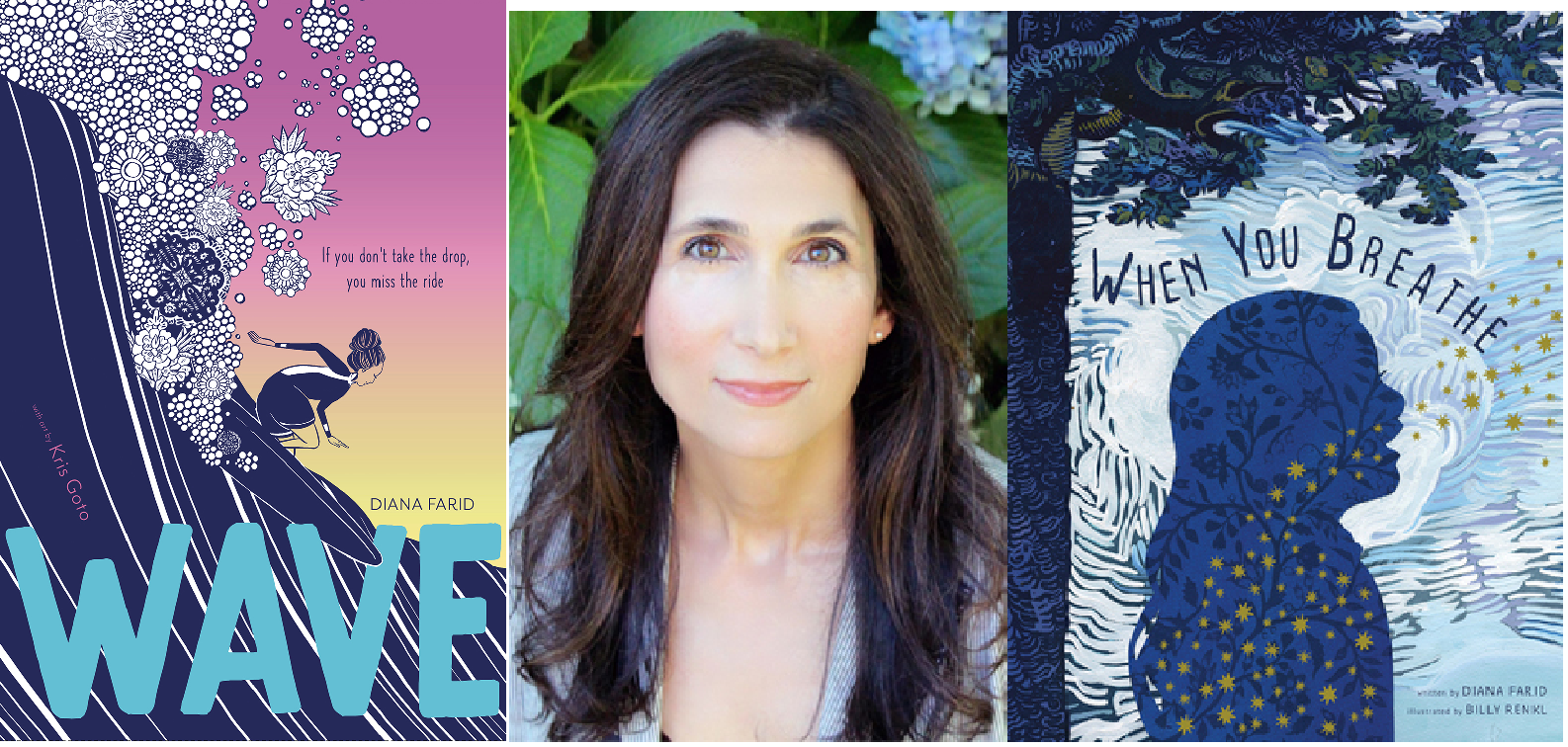
Diana Farid
Read: Wave
Want to read: When You Breathe


Katherine Applegate
Read: Odder
Want to read: The One and Only Ivan
 

-Anne


Wednesday, January 18, 2023

And so it begins: THE COUNT OF MONTE CRISTO


For the past three years I have selected one big, daunting book to read a year and I give myself the whole year to read it. This year's selection is The Count of Monte Cristo. It has long been on my TBR list and I've always avoided it since it weighs in at over 1200 pages (many versions have it at over 1400 pages, depending on font size I suppose.)

And so I begin ---

First, I purchased my own copy of the book (shown above from Word Cloud Classics) since I figured there was no way I'd finish a book of that length during a regular library checkout period of three weeks. 

Initially I set myself the goal of reading two chapters a day. The chapters are very short 6-10 pages long on average. That pace, however, seemed too slow or too fast depending on my mood and my planned pacing flew out the window, stalling out around page 55 or chapter 8.

Needing a catalyst to get me moving again, I explored purchasing the audio version from my audible account and I learned that my account allowed me free access to the book. Score. But there is a problem. The audiobook is 52 hours and 41 minutes long!!! Who has time to listen to that? Well, to be honest, I do, but...that is long!!!! One solution is to bump up the listening speed from 1 to 1.25. That adjustment shaved off nearly 10 hours of listening time. 42 hours is still long, but a bit better.  

Next hurdle I had to overcome was freeing up enough space on my phone to allow a download of such a big file. Imagine me sorting through apps and old photos deciding what to trash. That task done, the download went through.

Time to start listening. The narrator is Bill Homewood who is a British actor and a member of the Royal Shakespeare Company. He has many audiobook credits to his name. I'm guessing that he speaks French, also, as his pronunciation and accent of the French words seems very authentic.

My new plan is to listen to an hour of the audiobook every day and read the print book at night or whenever I cannot listen. Based on my listening experience yesterday, I think I will conquer about three or four chapters a day at this pace. The book has 118 chapters. I hope to have the book finished by mid-March, barring any other roadblocks. Once I get further into the book I may find myself abandoning the audiobook, since I can read much faster than listen. We'll see what happens.

Periodically I'll update my progress, probably on my Sunday Salon posts. So keep your eye on how I am doing. Accountability, you understand!

Happy reading to me.


-Anne

Sunday, January 15, 2023

Sunday Salon -- January 2023

Bingley wants to get up on the couch. Please?
Weather: Overcast and rainy. It is unseasonably warm too, which I view as worrisome.


The same meal every day of the week:
Oddly and unintentionally my husband ate essentially the same dinner meal every day for the past week, Sunday through Saturday! It started off as gyros made with gyros meat, flat bread, cucumbers, feta cheese, yogurt, humus, lettuce, tomatoes, and kalamata olives. The ingredients would disappear unequally so we kept replacing what ran out as the week went by allowing us to eat the same meal over and over. Several times our children and grandchildren came over and shared the meal with us. Ingredients needed to be stretched or subbed in with other variations. By Saturday, as we sat done to our seventh meal of gyros sandwiches, I was completely unenthusiastic with the meal. I don't care that I still have some leftovers. I'm done with these Greek sandwiches for a long while! Have you ever done this? Oddly, I haven't eaten the same thing for a full week before.

Scared Scriptless:  Both of our children gave Don and I tickets to events for our Christmas presents this year. Last night we drove up to Seattle for a fun event, a variation of the old TV show: 'Whose Line is it Anyway?" Colin Mochrie and Brad Sherman led the audience through a whole bunch of improv settings, some involved bringing the audience up on stage. We laughed throughout. Don's comment today was how healthy he feels after laughing for over two hours yesterday.

Christmas decorations tucked away for another year: We finally de-Christmased the house on Monday. The weather was nice on Wednesday so Don was able to climb up and remove the lights from the house. I can't decide if I like it better that the house seems so uncluttered or if I miss all the festive colors.

Books and reading: I actually did not finish a single book this week but I am working on two big ones: Demon Copperhead by Barbara Kingsolver and The Count of Monte Cristo by Alexandre Dumas. I also finally reviewed Cross Purposes by Bob Welch. It for this coming Tuesday's book club meeting.

I guess it wasn't a very active week! Thanks for reading about it anyway.

-Anne

Saturday, January 14, 2023

Review and book club questions for: CROSS PURPOSES: ONE BELIEVER'S STRUGGLE TO RECONCILE THE PEACE OF CHRIST WITH THE RAGE OF THE FAR RIGHT: A MEMOIR

When Donald Trump was elected President of the United States of America I was flabbergasted to learn that a big part of his win came from evangelical voters. Christians who brand themselves as evangelicals view their beliefs and interpretations of the Bible as correct and others' (even other Christians') beliefs as wrong or incorrect. As a life-long Christian myself I have a very hard time squaring the judgment thrown at me from evangelicals who view my beliefs and practices as not worthy of God's consideration. Some evangelicals tell me they go to "a Bible-believing church", implying that I go to a non-Bible-believing one(?). When I read the Bible I find messages of love and acceptance. "Love your neighbor as you love yourself." So imagine my shock to learn that people who have passed so much judgment on to me and others for worshiping in more tolerant, mainline Christian denominations voted for Donald Trump, a person who clearly has not lived a godly life and does not treat people the way he wants to be treated (or maybe he does, but just doesn't care). In fact, Trump's life practices seem to be the opposite of the way Jesus tells us to live from his example in the Bible. In the years after Trump's election I would often bemoan this apparent contradiction to other family members, friends, and colleagues. No one I knew could explain why evangelicals liked and voted for this man.

Then this book comes along like an answer to prayer: CROSS PURPOSES: ONE BELIEVER'S STRUGGLE TO RECONCILE THE PEACE OF CHRIST WITH THE RAGE OF THE FAR RIGHT: A MEMOIR written by Bob Welch. Bob is a friend of my sister and an acquaintance of mine. In fact, over the years I've read several of his books, usually received as gifts from my sister. I knew Bob was a Christian but I didn't know he thought himself of the evangelical variety. In his prologue Bob says he felt very uncomfortable with Trump right from the get-go and questioned how people of faith could want to vote for him.

"By now, contrasting Trump's ways with Christ's ways has become the stuff of cliches. But I had come to believe that deeper things were at work, that our evangelical faith was not only at cross-purposes with him, but with the Far Right in general; at cross-purposes with America that bordered on idolatry; indeed at cross-purposes with the very essence of Christianity as defined by Scripture: how we treat our neighbor. Try as I might, I couldn't reconcile the peace of Christ with the hard-edged politics of the Far Right."

Bob decided to write this book for himself and hoped he would not offend any of his friends, many of whom voted for Trump. He describes the book as a four-course meal: part personal memoir, part historical review, part political analysis, and part spiritual encouragement. This was exactly the book I needed to read and I imagine many people would feel the same way. Bob's analysis of the issue at hand is so scrupulously researched and so thoughtfully laid out it seems like he was divinely directed. The book is organized into chapters by years 2016-2021. Within each chapter is a "Hope for the Future" insert leaving the reader reason to feel some hope rather than wallowing in the awfulness of the facts. There are ten of these hope inserts: Remember our mission; Love one another; Replace pride with humility; Live without fear; Welcome in, don't wall off; Choose character over comfort; Dedicate ourselves to the truth; See ourselves not as victims; Not bow down to celebrity 'leaders; and Find the courage to change. Even as I type out these titles, I am tempted to go back and reread them. While I was busy reading through the text of each chapter I don't think I appreciated what Bob was doing with these nuggets. Now I see they are vital to helping us see the need for God, outside of politics. As he points out, we all need to stand for Christ, who endorses neither Republicans nor Democrats but transcends both.

Another aspect of the book for which I was super grateful was how Bob always brought every point he made back to scripture. As you've probably noticed, many Christians will quote scripture taken out of context (or phrases that are not even scripture but stated as such) to make their arguments. But Bob pulls in a lot of scripture not to merely justify his point of view but to point us to God and God's precepts. For example, Bob refers to many Christians as following tribal thinking...doing everything "The Tribe" does. If one attends a church where the tribe votes for Trump, as a tribe member you do too. 

The most transformational thing we can do as believers is making our faith, not our politics, the priority. Not worrying about the success of the Tribe but committing to the glory of God. Our identity needs to be in Christ, not a political party or political leaders, or political ideas whose essence and aims aren't always particularly godly. How can we expect the world to be attracted to Him, if we, as his supposed image-bearers, don't reflect His love and grace to that world? "Let us fix our eyes on Jesus, the author and perfecter of the faith" says Hebrews 12:2.

The book not only addresses the differences in theological topics, it also looks at the contrasts in social issues around racism, women in ministry, truth vs. lies, COVID-related health practices, and empathy for others. Bob didn't shy away from any tough social issue and he did his homework on each topic.

After reading only a few chapters I recommended we read Cross Purposes as a book club selection.We are a church-sponsored book club after all. It seemed like a great idea and many gals agreed. But we have encountered a few problems and I worry that our discussion this coming Tuesday will be less than enthusiastic. (I'll circle back after the discussion.)

  • For one thing, our club usually reads books from the library book club kits so no one has to buy their books. I'm aware that a few gals did go out and buy their own copies, but not many. I purchased a copy for our church library and have shared copies loaned to me by both my mother and my sister and started them all in circulation to our members. We'll soon see how many gals actually read the book. 
  • Secondly, one gal shared with the group that reading the book made her feel like she had a bad case of PTSD. Having survived the awful Trump years she didn't enjoy going back and reliving those years on the pages. I hope her comments don't put off others from reading the book, though I appreciate where she is coming from. The books did bring back some very painful memories.
  • Thirdly, the discussion questions in the back of the book are super specific and require a physical book to answer. If we are sharing three or four copies among us, all these questions will likely flummox us. So I decided to write my own questions for our discussion, or rework the publisher's questions.

Discussion questions for Cross Purposes

1. What do you make of the title: Cross Purposes? Can you recall any of the ways the author wove the title into his text and his arguments? What do think of the cover illustration?

2. What did you appreciate/not appreciate about how the book is organized? 

3. The author interspersed ten inserts called "Hopes for the Future". Which do you think are necessary for helping to refocus evangelicals? Which one spoke to you loudest in your own life? List of these hopes are: Remember our mission; Love one another; Replace pride with humility; Live without fear; Welcome in, don't wall off; Choose character over comfort; Dedicate ourselves to the truth; See ourselves not as victims; Not bow down to celebrity 'leaders; and Find the courage to change.

4. As the author was conducting research for the book he discovered two false narratives: 'Trump is the problem' and 'Evangelicals' undying loyalty to the Far Right is the problem'. Explain what he means. (Page 15)

5. As a Christian who attends a mainline denomination, what did you learn about evangelicals that you didn't understand before? Do you have any friends or family members who identify as evangelical? How do you think they'd react to this book/topic?

6. Welch refers to two incidents which caused him to stop and think about himself as a Christian: the college administrator who told him, "I didn't realize you were one of us" and his own reaction to the little girl in the library who was singing. What incidents have you had in your life where you've had to face yourself and your own hypocrisy in your faith and your life?

7. What do you think of the way the leaders of several evangelical churches have treated Beth Moore? Women in church leadership? (Chapter 12)

8. After George Floyd was killed by the police and the Black Lives Matter movement geared up, evangelical churches began targeting BLM not racism (227) in their sermons. "I found it interesting that of the many ways a pastor could have approached the race issue -- an innocent man had been murdered before their eyes -- they chose the one that protected The Tribe. The one that required no introspection or obligation on our parts" (228). Explain what Welch means by The Tribe? Do you agree that many white church goers don't want to face racial troubles because it moves them out of the comfort zone or causes them to address their own biases? [Keep reading down page 228 for more examples of this.]

9. The language choices we use when describing racial issues can be incendiary -- not leading toward an open discussion, but closing it off. A pastor friend of Welch's says he much prefers the term 'white advantage' instead of 'white privilege'. (231) Do you agree that terminology can be a problem? What are some other examples you can think of?

10. In Chapter 16 Welch talks about his decision to speak up, to write this book, to shine a light on what was happening in the evangelical world with their support for Trump and their lack of support for people of different life circumstances than their own, even how they'd attack people who expressed the need for social justice based on Micah 6:8. "Why were some evangelicals unable or unwilling to see that the values of Trump and the values of Jesus were polar opposites?" (235) Look through the chapter for examples of what he means.

11.  What did you learn about evangelicals looking through the lens of COVID and COVID vaccines/social distancing mandates? (Chapter 17 & 18) How do your beliefs advise your community actions? How does fear factor into your decisions?

12. "Truth... is the first casualty of tyranny." Do you agree with this statement? Give some examples from history or from our current past. (Chapter 20)

13. React to this statement: "It is not the church's job to make America great again, it's the church's job to glorify God." (301) Change is hard, what do you think of Welch's four steps toward change in his Hope for the Future? (300-310) Would you add anything?

14. As a librarian I was totally impressed by the end notes, books for further reading, index, and acknowledgments at the end of the book, 32 pages worth. What went through your head when you saw this?

15. Welch hoped the book would generate good conversations with his family and friends. If you could give this book to someone who identifies as evangelical, do you think they'd read it? What points would you make in your discussion if you had a chance?

-Anne

Thursday, January 12, 2023

Review and quotes: IF ON A WINTER'S NIGHT A TRAVELER


Title:
If On a Winters's Night a Traveler by Italo Calvino, translated from Italian by William Weaver

Book Beginnings quote: 

You are about to begin reading Italo Calvino's new novel, If on a winter's night a traveler. Relax. Concentrate. Dispel every other thought. Let the world around you fade. Best to close the door; the TV is always on in the next room. Tell the others right away, "No I don't want to watch TV!" Raise your voice -- they won't hear you otherwise -- "I'm reading! I don't want to be disturbed!" Maybe they haven't heard you, with all that racket; speak louder, yell: "I'm beginning to read Italo Calvino's new novel!" Or if you prefer, don't say anything; just hope they'll leave you alone.

Friday56 quote, from page 61 e-book:

The novel you are reading wants to present to you a corporeal world, thick, detailed. Immersed in your reading, you move the paper knife mechanically in the depth of the volume: your reading has not yet reached the end of the first chapter , but your cutting has already gone far ahead. And there, at the moment when your attention is gripped by the suspense, in the middle of a decisive sentence, you turn the page and find yourself facing two blank sheets.

Summary: The book begins in a train station where the narrator, who remains unnamed throughout, introduces himself in a some sort of plot, but just when the details are getting interesting some sort of publishing problem occurs and you cannot continue reading the story. So you return to the bookstore to return the book and there you meet a lady, Ludmilla, who is there for the same reason. Ultimately the two of you team up to find a complete version of the book but every attempt at finding it leads to another, and another, incomplete book, ten in all. Each time the error falls upon some aspect of writing, publishing, book sales, translations, etc. The titles of all these ten books, when read together, form a message for you that brings all the parts together. And you, yes you again Reader, win the girl Ludmilla. As Calvino says there are only two endings to books: death and marriage. When you finish the book so does the reader in the book.

Review: From the very beginning, If On a Winter's Night a Traveler places you, yes you, the reader as a main character. Admittedly is it disorienting and odd. Just when I thought I'd figured out what was happening to plot and the story seemed to shift or shift back so I never really knew what was going on. until the last chapter when everything wraps up in a very clever way.

If On a Winter's Night a Traveler is considered to be fine example of avant garde literature.  "In literature, the term avant-garde refers to poetry or prose that pushes the boundaries and is experimental. Avant-garde literature rejects the standard practices of other writers and instead looks for what's new and exciting. Innovation is at the heart of avant-garde work." Experimental and pushing boundaries is this book for sure. Weird would be another word I'd use to describe it. Frustrating, odd, confusing would also work. While I was reading it, I wished I hadn't chosen it. But when I was finished I was glad I did. Why? Because I want to stretch myself. I don't want to read only books that make me comfortable and though I doubt I will seek out too many other avant garde selections in the future I can now say I have read one.


Book Beginnings on Friday is hosted by Rose City ReaderShare the opening quote from current book.
Th
e Friday56 is hosted at Freda's VoiceFind a quote from page 56 to share. 

Visit these two websites to participate. Click on links to read quotes from books other people are reading. It is a great way to make blog friends and to get suggestions for new reading material.  

 This is a Classics Club SPIN selection.

-Anne