"Outside a dog a book is man's best friend, inside a dog it is too dark to read!" -Groucho Marx========="The person, be it gentleman or lady, who has not pleasure in a good novel, must be intolerably stupid." -Jane Austen========="I don’t believe in the kind of magic in my books. But I do believe something very magical can happen when you read a good book."-JK Rowling========"I spend a lot of time reading." -Bill Gates=========“Ahhh. Bed, book, kitten, sandwich. All one needed in life, really.” -Jacqueline Kelly=========

Sunday, February 6, 2022

Sunday Salon: February is here


Weather: This morning it is very foggy but it is supposed to be sunny with cool temperatures when it burns off. This is the break between storms.

Death of a beloved pet: We had to put our cat, Demi, to sleep this past week. I put together a tribute of her on this post --- Goodbye to a Beloved Pet. My heart is broken. She was my special girl. 

Books read:

  • The Lincoln Highway by Amor Towles -- We just selected this for an upcoming book club. Audio and print. Fantastic. Audio.
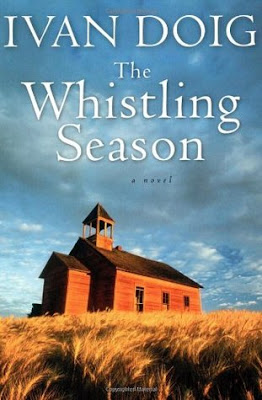
  • The Whistling Season by Ivan Doig. A reread. I still love it. Print.

Reviews completed:

Currently reading:

  • The Firekeeper's Daughter by Angeline Boulley. The 2022 Printz Award winner for best YA novel of the year. Helen Murdoch and I are do a read-along together. Print. 20%
  • Call Us What We Carry: Poems by Amanda Gorman. The poet who spoke at Biden's Inauguration. This is her first collection of poetry. Most of the poems so far have been about the pandemic and about being in lcokdowns. Print 20%.
  • Under a White Sky: The Nature of the Future by Elizabeth Kolbert. Another nonfiction book about climate change and our life on earth. Audio. 5%

In the mail, two short books to read in the shortest month:

  • A Psalm for the Wild Built by Becky Chambers
  • A Spindle Splintered by Alix E. Harrow


Emergency!!!! We've got to do something to stop all this book banning?
It is insane what is happening today with school boards banning books and passing laws that disallow teachers teaching anything that would make white people feel bad about themselves. I am so, so worried for the fate of our country if we keep going down this path. Today, if you have a few extra dollars in your account, order a banned/censored book, read it, and review it on your blog or on your social media pages. This has got to stop. Find a book from any of these lists: ALA Top Challenged books of 2020; 16-pages of books challenged in a Texas school district;  Maus, which was removed from an 8th grade unit in Tennessee; or any of the books I've listed below. Click the hyperlink to read my review:

Book Banning closes minds. Self censorship is a much better idea. Don't remove books from library shelves, just don't check out the ones you don't want to read!

Maus is about the Holocaust. Why would anyone not want their children to know about that?


-Anne

Saturday, February 5, 2022

Goodbye to a beloved pet


Two days ago my family and I had to say goodbye to our beloved cat, Demi. She was nineteen-years-old and we've known for many months that the day was coming but it still came as a sad shock to have to say goodbye forever. Because of her longevity as a member of our family her daily presence will be dearly missed.  

Demi came to us at the end a long string of cats who had come and gone -- JellyPoofBarneyCloverTeazerToriSocks -- names and personalities which run together in our memory. Only Ichiro, another long-lived cat who died in 2020, and Gumbie, who came with me into our marriage, stand out with Demi as special cats who grabbed a hold of our hearts and wouldn't let go.  

Demi was young until she got old. There was never an in-between Demi. She was beautiful, sleek and healthy until one day (it seemed) she could no longer jump up on the counter to get food and soon she just stopped grooming herself, leaving that task to me and my pitiful efforts to keep her clean and mat-free. 

Demi was named as part of a family tradition to name pets after the musical CATS which was inspired by the poetry of T.S. Eliot's Old Possum's Book of Practical Cats. Here are the names we appropriated from those poems:

  • Gumbie---"I have a Gumbie cat in mind..." She was a beautiful black and white long hair.
  • Jellicle, Jelly for short--- "Because Jellicles can and jellicles do..." He was a lovely, sleek black cat with a few white markings and a very mischievous disposition.
  • Rumpelteazer, Teazer for short---"Mungojerrie and Rumpelteazer were a notorious couple of cats..." She was a long-haired tabby, a stray who found herself at our door one day. 
  • Victoria, Tori for short---Victoria was the dance captain in the Broadway production and the center of the story in the film but no songs mention her name. Our cat was a beautiful, but neurotic half Siamese, half Rag Doll long-hair.
  • Demeter, Demi for short---"There are fancier names if you think they sound sweeter, Some for the gentlemen, some for the dames, Such as Plato, Ademetus, Electra, Demeter. But all of them sensible, everyday names..." She was a beautiful, silky, white long-hair girl.
Whenever one of our cats dies someone jokes that the cat is going to the 'Heavyside Layer' which is also a reference from CATS. In the play the cats are gathered to determine which cat will be honored. When Grizabella, the rattiest cat of all, shows up everyone dismisses her as not special. But after Grizabella finishes singing "Memory", the tribe understand and empathize with her. As all the others greet Grizabella, the music builds and leads to the lyrics "Up Up Up past the Russell Hotel, Up Up Up Up to the Heaviside Layer." Old Deuteronomy takes Grizabella by the hand and leads her onto the tire, which rises up. Grizabella enters the Heaviside Layer. We like to imagine that Old Deuteronomy has thus guided our old Demi to the Heavyside Layer where she will live as a happy and healthy cat again.

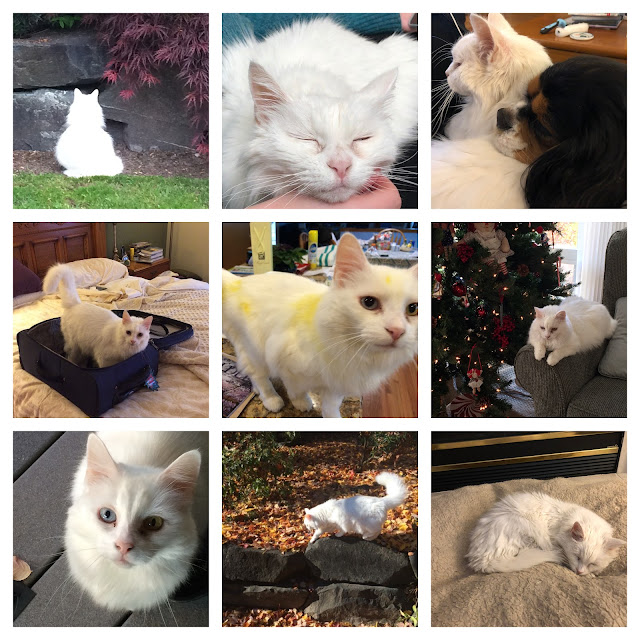
The collage above shows a fairly good summary of her personality:

  • She was a mouse and bird hunter (unfortunately) and would sit at our rock wall for hours if she thought she heard a mouse.
  • Though she rarely sat on our laps, she loved to be petted and scratched. For years she would sleep between Don's and my pillows. Woe to the person who accidentally uncovered their hand at night. She would be right there ready to be petted for as long as we could stand it.
  • She was not only a friend to her humans but to our other pets. In her later years she often sought out our dog, Bingley, for comfort and warmth. 
  • Demi was always acutely aware of our comings and goings. She wanted us to stay, if at all possible. When we did travel she would usually act angry when we got home, but only for a few hours. Then all was forgiven.
  • One day Demi came home from a trip to the yard covered with yellow pollen. Her yellow spots unfazed her but she liked all the attention she got from us at the time.
  • Christmas delighted her. When she was young we had a rotating artificial tree. She would climb aboard and ride that Christmas tree around and around in circles for hours. She also would try to get as high in the tree as possible. Over the years her trips up the tree caused the branches to sag so we got rid of it. Every year we would place ornaments on the bottom branches for the pets, ones we didn't mind if they were played with. We would have to return these ornaments to the tree over and over. On Christmas morning Demi and Ichiro would always get a small stocking stuffed with catnip as their gifts.
  • Demi was beautiful. We think she was a Turkish Angora, though we'll never know for sure. Her coat was long and silky and it didn't mat easily, until she stopped grooming. She had one blue eye and one yellow eye. Very unique.

  • Demi loved to go outside and usually stayed pretty close to home. But if she didn't return when I called her I'd get pretty worried since we'd had pretty bad luck with the string of cats that preceded her. At one time our neighborhood was filled with wild bunnies which attracted coyotes, so that was always a worry.
  • I took the last photo in the collage above of Demi the morning before her last trip to the vet. She was no longer able to jump up on the couch or beds, so she resorted to sleeping on the dog's bed. I think she looks so peaceful here.

Goodbye, dear girl. I love you so much and will miss you forever.


-Anne

Friday, February 4, 2022

A super late review: THE WHISTLING SEASON


Back in 2009 I read a book which became a personal favorite, The Whistling Season by Ivan Doig. I reread it in 2015 when my book club selected it for a monthly meeting. I listened to the audiobook both times and found myself completely taken by the setting, the characters, and the plot. But for some odd reason, I never reviewed the book after either reading. I am correcting that error in judgment now but in order to facilitate the writing of a super overdue review I went ahead and reread the book again, this time reading the print edition.

First, let me say a word or two about the author, Ivan Doig. Doig, who died in 2015, wrote mostly about life in the West, specifically his native Montana. The Whistling Season is set in Eastern Montana on a homesteaded dry farm and its surrounding community. Doig's stories tell about life of the common man, doing common but essential jobs. Doig won many awards and much acclaim during his writing career. About his writing, Doig said, 

"I don't think of myself as a 'Western' writer". To me, language—the substance on the page, that poetry under the prose—is the ultimate 'region,' the true home, for a writer. If I have any creed that I wish  you as readers, necessary accomplices in this flirtatious ceremony of writing and reading, will take with you from my pages, it'd be this belief of mine that writers of caliber can ground their work in specific land and lingo and yet be writing of that larger country: life."

That is certainly what The Whistling Season is about: life on a remote farm in 1910 for a farmer, Oliver Milliron, and his three sons: Paul, Damon, and Toby. It is also about the small community whose life centers around the rural, one-room school house.

The book opens in the late 1950s with Paul Milliron, the narrator, now the Montana Superintendent of Public Instruction, looking back on his life in 1910 when he and his brothers attended school in a one-room school house. "When I visit the back corners of my life again after so long a time, littlest things jump out first." He is standing in his old home recalling memories from that year a long, long ago but many of those memories are as clear as day. "If I have learned anything in a lifetime spent overseeing schools, it is that childhood is the one story that stands by itself in every soul.

Memories flood back from that pivotal year, starting when his father, a widower since his wife died the year before, answers an ad in the newspaper for a housekeeper who "Can't Cook but Doesn't Bite." Rose Llewellyn arrives at the train station in Marius Coulee to start her new job, with her brother, Morris Morgan. Morrie ends up stepping in as the teacher when the previous teacher runs off in the middle of the school year. Though he has never taught before, he is a natural at igniting student's imaginations.  

So what is it that I like so much about The Whistling Season?

First the characters: 

  • Paul, the oldest of the boys who is so clever and aching for intellectual stimulation just comes alive under Morrie's tutelage. We get to know him as both a thirteen-year-old and as a grown man.
  • Damon, the middle child who loves everything about sports and action. He is always rearing to go.
  • Toby, the sweet youngest brother who is so proud of his perfect attendance and loves his dog, Houdini.
  • Oliver, the father who is wise and wants the best for his boys.
  • Rose, who comes in the house every morning whistling her happy tunes and finds her way into everyone's heart.
  • Morrie, the creativity, energy, and intellect of this man is what we all wish we'd had in our teachers over the years.
  • Cast of school children, all named and friends of the Milliron boys
  • Brose Turley and his son Eric, the villain of the story. Don't all good stories have one?

Secondly the setting, especially the one-room school house in the middle of the dryland farming community. As Paul is reflecting on it's importance in his life from his vantage point looking back and what is being asked of him as the School Superintendent, to consolidate these smalls schools and bus the children to attend schools in larger towns, he says, 

What is being asked, no, demanded of me is not only the forced extinction of the little schools. It will also slowly kill those rural neighborhoods...No schoolhouse to send their children to. No schoolhouse for a Saturday-night dance. No schoolhouse for election day; for the Grange meeting; for the 4-H club; for the quilting bee; for the pinochle tournament; for the reading groups; for any of the gatherings that are bloodstream of community...Whatever the twist of fate, I am the product of what I am being asked to do away with. If Marius Coulee didn't hold full sessions in the school of life, I don't know where it ever is to be found (294-5).

What else? Halley's Comet. Wrong-end-to horse races. Tent revivals. Arrow head collections and buffalo digs. Dog piles and snowball fights. Latin lessons and so much more. 

What is it in The Whistling Season that really speaks to me? Is it because both my grandmother and Don's grandfather attended small, rural schools when they were young so I feel a small connection to them? That could be part of the attraction. Or maybe, is it that I was a teacher for over thirty years and I know how hard it is to keep students engaged and active in their own education? I certainly appreciated the almost magical way that Morrie connected with his students and creatively found solutions to nagging problems. I suspect the book really speaks to me on two levels: the adult level where there are problems to be solved and solutions to be found, and the child level where there is life to be lived and joy to be found. I love recalling my early days and enjoy telling stories which helps keep those memories of my past alive. As Paul says, "Even when it stands vacant the past is never empty."

As you can tell from this long overdue review, I love The Whistling Season and I suspect you will, too.

Read more super past due reviews here.

-Anne

Thursday, February 3, 2022

Review and quotes: BEAUTIFUL COUNTRY


Title:
Beautiful County: a Memoir by Qian Julie Wang

Book Beginnings quote: 

How It Began.

My story starts decades before my birth. In my father's earliest memory, he is four years old, shooting a toy gun at nearby birds as he skips to the town square. There he halts, arrested by the curious, swaying shapes that he is slow to recognize: two men dangling from a muscular tree.

Friday56 quote: 

Chapter 6. Native Speaker.

I had many first days of school, and I didn't like any of them. On the eve of my first-ever day of school in Zhong Guo, when MaMa told me I would be starting school the next morning, I dissolved into a puddle of tears.

Summary: The story of Qian Julie Wang's life began when her father witnessed the beginnings of the Cultural Revolution that swept through China in the late 1960s. He not only witnessed the hanging of innocent men, his wholefamily became targets of the government's wrath after his brother committed some offense. Later when Qian's father was a professor he spoke out against the government and once more became a target. He knew it and fled illegally to the United States. In 1994 his wife, also a college professor, and daughter, Qian, followed him to the USA on visas set to expire way too soon. "My parents and I would spend the next five years in the furtive shadows of New York City, pushing past hunger pangs to labor at menial jobs, with no rights, no access to medical care, no hope of legality. The Chinese refer to being undocumented colloquially as “hei”: being in the dark, being blacked out. And aptly so, because we spent those years shrouded in darkness while wrestling with hope and dignity" (NYT).

Review: I should divide my review of Beautiful Country into two halves. The first half found me reading the book at the same time as I was listening to the audiobook Crying in the H Mart. Though the stories are vastly different they have some similarities -- Asian parents or mother; very strong mother-daughter bond; differences in US culture vs Asian culture -- so I found myself comparing the two. Beautiful Country took second place and my reading slowed to a trickle until the library checkout expired and I had to get back in line to complete the book.

The second half of my review starts when I get the book back from the library in January and this time I am not reading some other competing book. I am shocked by how vivid and touching the story is. It is horrifying to think about the way people are forced to live in the USA when they are trying to fly under the radar. Both parents, professionals in China, work menial job at below minimum wage. The family is forced to live in sub-standard housing shared by other immigrants, often eating what they can scrounge up or find in the garbage. Qian is eventually sent to school where her English is so bad they place her in a Special Education classroom where the teacher basically ignores her. Her only companions are the library books she devours as she teaches herself English. Eventually she attends a school intended for Asian immigrants where she is still met with comments from thoughtless teachers and bullied by classmates. But here, at least, she makes a few friends. The mother finally figures out how to get to Canada where the government is seeking help from educated immigrants. When Qian returns to the USA next time it is for college and for graduate school. Though it takes her many, many more years to deal with the trauma caused by her childhood living as an "illegal immigrant."

This is a powerful and eye-opening memoir. Qian said this about why she wrote the book: "I put these stories to paper for this country’s forgotten children, past and present, who grow up cloaked in fear, desolation, and the belief that that their very existence is wrong, their very being illegal. And I dream of a day when each and every one of us will have no reason to fear stepping out of the shadows."

Book Beginnings on Friday is hosted by Rose City ReaderShare the opening quote from current book.
Th
e Friday56 is hosted at Freda's VoiceFind a quote from page 56 to share. 

Visit these two websites to participate. Click on links to read quotes from books other people are reading. It is a great way to make blog friends and to get suggestions for new reading material.  

RHS Gals book club selection for Feb. 2022.

-Anne

Tuesday, February 1, 2022

Narniathon: PRINCE CASPIAN


When my daughter and I decided to reread The Chronicles of Narnia last year I got as far as Prince Caspian before I crapped out. I think she got through The Voyage of the Dawn Treader before she called it quits. Why did I stop so close to the starting spot, I wonder? I'm hoping that today's review and participation in answering the Narniathon questions will help supply some answers for myself.

1. Tolkien had written of his Middle-earth saga “I wisely started with a map and made the story fit.” Prince Caspian was the first of the Narniad chronicles to include a map by Pauline Baynes showing part of Narnia and the adjoining lands. Does its addition help you orientate yourself more than if it wasn’t included? Or do you agree with Lucy in the following exchange that there are more important things to keep in mind?¹ 

'That’s the worst of girls,’ said Edmund to Peter and the Dwarf. ‘They never carry a map in their heads.’
‘That’s because our heads have something inside them,’ said Lucy.

Ha-ha. I love Lucy's retort. I just had a conversation with my husband this past weekend about maps-in-the-head. I get turned around when I travel unless I can get an adequate aerial view in my head. This is usually accomplished after much repetition, not actually looking at a map. But I digress.

Speaking of looking at a map, I didn't remember seeing the map of Narnia in my edition of Prince Caspian. (Pause, while I get up and go look again...) Nope, I don't have it. The book jacket mentions the medieval pomp and pageantry of Pauline Baynes line drawings, but makes no mention of the map. Can anyone tell me where it is located in your book, page number or end pages? Where have I seen it? Oh, I remember. My daughter had a poster of a Narnia map in her bedroom. Is it still here even though she has moved out? (Pause, while I tromp upstairs...) Nope. No map on the wall, but it looked like the one below, which isn't a very helpful map if one wants to navigate around Narnia.


So, let me investigate a bit online to see if I can find any other Narnia maps. (Pause, while I open up the Internet...) Ah. With a little investigation I found that the above map was drawn and painted by Pauline Baynes in 1972. My book was published in 1951 by Macmillian so that would explain why it is missing. Next I found a map which was said to be the endpapers in Prince Caspian. I wonder if that was only in the British publication or if I just have some cheap publication with no fancy endpapers? See below.


Honestly, I don't think this map is very useful, either, though it is fun to look at it and try to remember what happened where. While searching, I also found this map of Narnia, which is a bit better than the other two, but not much. It, at least, looks old and the lamp post is clearly labeled.


Enough about maps. Now I'm upset that my edition doesn't have it included.

2. In The Lion, the Witch and the Wardrobe we had talking animals (such as beavers, and one lion who talked and one who didn’t). In Prince Caspian we have many more fauna which talk, another instance of Lewis’s childhood obsession with animals with the power of speech. Do you find animal characters imbued with human abilities and mannerisms rather endearing, or mildly irritating?

I missed the darling talking animals from the first book, though several made an appearance later in the story. Honestly, I didn't connect with many characters in Prince Caspian, even Caspian himself. I've read a few reviews from others participating in Narniathon who mentioned that the characters seemed flat. I would agree. The whole story just didn't have the punch that The Lion, the Witch, and the Wardrobe had. It is surprisingly boring in parts, even though this book has another big battle.

3. Prince Caspian comes across as a book explicitly about war, especially interesting given that Michael Ward’s Planet Narnia suggested that this installment — in Lewis’s implicit scheme of a series determined by medieval cosmology — was characterized by Mars.² But is there more to this novel than just martial exploits, bickerings, skirmishes, duels and set battles?

Not being a student of Greek and Roman mythology I did a little research about Mars today to appear that I know what I am talking about. I do think that Lewis was playing around with the gods of the planets. Mars being the god of Mars, the red planet, made me think of red things in the story -- red-haired dwarfs, red apples, red capes, and, of course, the red lion. Mars is also known as the god of the wild and an agricultural guardian. This book, more than any other, feathers the flora and fauna with even the trees coming to the rescue to save Narnia from the humans.

Prince Caspian is my least favorite of all the books in the series but a vital book to help understand the history of the land and its beings. Perhaps this is why I stopped rereading the series after I completed the book. I am committed to proceed this time. If you want to jump in, read it second in the order Lewis published his books, not fourth, like the cover of some book I found online says. The Voyage of the Dawn Treader is cued up for March!


-Anne

Monday, January 31, 2022

TTT: Novels with Character Names in the Title


Top Ten Tuesday: Novels with Character Names in the Title

Note: Apparently I don't read many books with character names in the title. I had to look back as far as August 2019 to find enough titles to fulfill this assignment hoping to highlight recent reads.


Terciel and Elinor (and others in this series: Sabriel, Lirael) by Garth Nix


Olive, Again (and the first book in the series: Olive Kitteridge) by Elizabeth Strout


Hamnet by Maggie O'Farrell

Mary Jane by Jessica Anya Blau

Prince Caspian: The Return to Narnia by C.S. Lewis 

The Picture of Dorian Gray by Oscar Wilde


The Unlikely Pilgrimage of Harold Fry by Rachel Joyce

The Brilliant Life of Eudora Honeysett by Annie Lyons

Oona Out of Order by Margarita Montimore

Are You There, God? It's Me, Margaret by Judy Blume

Fleishman Is In Trouble by Taffy Brodesser-Akner


Virgil Wander by Leif Enger

Daisy Jones and the Six by Taylor Jenkins Reid

Miss Kopp's Midnight Confessions by Amy Stewart


-Anne

Sunday, January 30, 2022

Sunday Salon --- with an assist from Proverbs

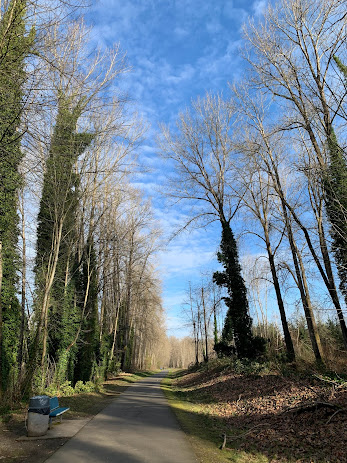
A beautiful day for a dog walk on the Riverfront Trail

Weather: Gray and overcast. Not very inviting. But yesterday was glorious and we took a long walk with the dog along the Puyallup River which runs through our community. 

Whoever remains stiff-necked after many rebukes will suddenly be destroyed--without remedy. -Prov. 29:1 NIV

Proverbs: I am a new member of a Facebook group called 'Christians Against COVID Denialism.' It seems to help me to be part of a group where the members believe in both God AND science. This past week someone posted a challenge for members to find Proverbs (from the Old Testament) that speak to the recent disconnect between Christians and vaccinations. Today I share some of the cited Proverbs here. (The letters after the verses are the Bible translations.)

There is a way that appears to be right, but in the end it leads to death. -Prov. 14:12 NIV

COVID: Though the Omicron variant of COVID is supposed to be milder, it is more transmissible than the Delta variant. I just learned that a friend contracted it, likely from a trip to the grocery store. She is doing better but who knows who else ran into the virus that day. Be careful out there.

The wise are careful and avoid evil, but fools become excited and overconfident. -Prov. 14:16 CEB
 
Slow down: This past week I babysat my grandson at his home rather than transporting him to our house. His family lives a few miles from the entrance to Mt. Rainier National Park which is at a much higher elevation than our home. In a counterintuitive twist, it was sunny and warm at his home, but foggy and cold at ours. The sunshine beckoned and so Jamie and I took several short walks. As I made my way down the street with his one-year-old hand in mine, I reflected on how nice it was to slow down and move at a child's pace. 
 
Where there is no revelation, the people cast off restraint; But happy is he who keeps the law. -Prov. 29:18 NKJV
 
Book Club surprise: The RHS Gals book club met on Wednesday. I was in charge of the discussion this month and was worried that the book we had selected, The Authenticity Project, would be a bomb. It wasn't. We had a great discussion. I was probably the most surprised of anyone since I was pretty disappointed in the book.
 
Those who trust in themselves are fools, but those who walk in wisdom are kept safe. -Prov. 28:26 NIV
 
Books read this week -- I have now finished reading all the Cybils SH Nonfiction finalists.
  • The Rebellious Life of Rosa Parks (Young Reader's Edition) by Jeanne Theoharis and Brandy Colbert -- Rosa Parks was not a meek and unwitting participant in the Montgomery Bus Boycott when she wouldn't give up her seat on the bus. She was an activist long before her action started the ball rolling. This book is setting the record straight. Print.
  • Everything You Wanted To Know About Indians But Were Afraid to Ask (Young Reader's Edition) by Anton Treuer -- the book is organized according to topics -- History, Terminology, Religion & Culture, Powwow, etc. -- and can be used to look up the answer to one burning question such as "Why don't Indians cut their hair?" -- or read in its entirety, like I am doing. I gained so many insights. Print and audio.
Sensible people foresee trouble and hide from it, but gullible people go ahead and suffer the consequence. -Proverbs 22:3 NOG
 
Currently reading: 
  • The Lincoln Highway by Amor Towles -- We just selected this for an upcoming book club. Audio and print. 55%.
  • The Whistling Season by Ivan Doig. A reread. I still love it. Print. 35%
If you stop using good sense, you will find yourself in the grave. -Prov. 21:16 CEV
 
Great news: Our daughter is moving back from California. She got a job at a hospital system in our town. Don and I spent a few days looking for apartments for her and she has applied to a nice one not far from our home. Woot woot!
 
For the simple are killed by their turning away, and the complacency of fools destroys them; but whoever listens to me will dwell secure and will be at ease, without dread of disaster. -Prov.‬ ‭1:32-33‬ ‭ESV‬‬
 
King Solomon: Doesn't it seem like King Solomon had COVID anti-vax nonsense in mind when he wrote these proverbs?
 
Whoever heeds discipline shows the way to life, but whoever ignores correction leads others astray. -Proverbs 10:17 ESV
 
The honest truth: I was reading an article online this week. It was written by a teacher whose student was diagnosed with cancer. She ended up visiting him in the hospital several times and becoming good friends with his family. Sadly the boy died but the funeral was a celebration of his life. The kid must have had a great sense of humor. He even made a list of songs he wanted played during the service which included one by Shittyflutes. I had to listen to THAT. Here is the link so you can, too. Don't have anything in your mouth while you listen or you might choke.
     
 
One who guards his mouth protects his life; One who opens wide his lips comes to ruin. -Prov. 13:3 NASB (Wearing masks?)

Fred and George are so happy they got a new scratching pad they can't even wait until it is set on to the floor. So happy these guys will live closer to me in just a short month.

-Anne

Thursday, January 27, 2022

Review and quotes: THE STORY OF MORE


Title:
The Story of More: How We Got to Climate Change and Where to Go From Here by Hope Jahren

Book Beginnings quote:


Friday56: 

Opening a Pandora's box of salmon has not been without cost, however. There are distinct advantages to traditional fishing: namely the fish breed themselves, feed themselves, and succeed or fail as adults based upon their own efforts.

Summary: 

In The Story of More, Hope Jahren, author of the memoir Lab Girl, illuminates the link between human habits and our imperiled planet. In concise, highly readable chapters, she takes us through the science behind the key inventions—from electric power to large-scale farming to automobiles—that, even as they help us, release greenhouse gases into the atmosphere like never before. She explains the current and projected consequences of global warming—from superstorms to rising sea levels—and the actions that we all can take to fight back. At once an explainer on the mechanisms of global change and a lively, personal narrative given to us in Jahren’s inimitable voice, The Story of More is the essential pocket primer on climate change that will leave an indelible impact on everyone who reads it

Review: Oh boy, this was a hard book to read. Why? Because Jahren shares so many details that prove that the earth is giving us HUGE warning signals that it is nearing collapse. What happens if it does? We all die. 

I listened to the audiobook which Jahren read herself and though the book (audiobook) is short I had the hardest time getting through it. One can only take so much bad news at a time. Out of 210 pages one has to wade through 180 pages of all the information how we got to climate change before she started to offer suggestions of what we can do to make a significant difference to help alter the course we are currently on. 

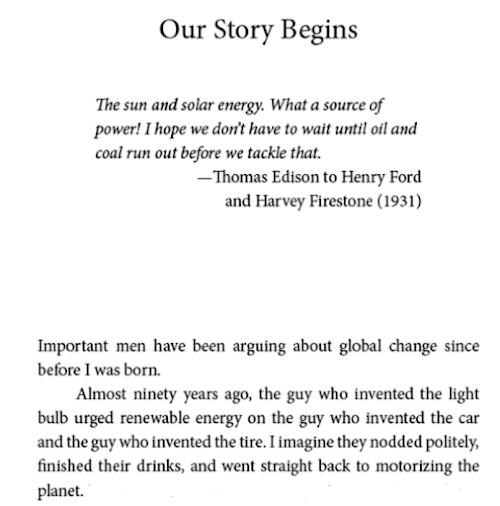
After reading a similar book by David Attenborough in December I am convinced that I cannot keep living the way I've been living. Not that I hadn't figured that out already but now I know I can't slowly work into change. We all need to reduce our energy usage and do it as soon as we can. One of the big things we can all do if eat less (or no) meat. It is shocking how much of our energy goes into raising animals for meat. Use less energy. Drive less. Take less airplane trips. Use less electricity. Encourage biodiversity. Stop using so much plastic. It is all stuff we've heard before but it is real. The time to change is now!

Should you read this book? Yes! Will you like it? Probably not. Read it anyway!

Book Beginnings on Friday is hosted by Rose City ReaderShare the opening quote from current book.
Th
e Friday56 is hosted at Freda's VoiceFind a quote from page 56 to share. 

Visit these two websites to participate. Click on links to read quotes from books other people are reading. It is a great way to make blog friends and to get suggestions for new reading material.  


-Anne.

Tuesday, January 25, 2022

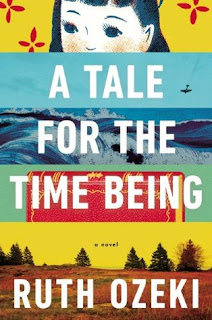
A super late review: A TALE FOR THE TIME BEING


Back in 2014 my book group read a bunch of wonderful selections, all books worth pondering over, many were great for reflection, books worthy of discussions that stayed with me long after we'd moved on to other books and other discussions. A Tale for the Time Being is one of those books. Seven years after reading it I am still contemplating its meaning and reflecting on its beauty.

Ruth Ozeki is a Japanese American/Canadian author who splits her time between New York, an island off British Columbia -- where her husband works as an artist, -- and Western Massachusetts -- where she teaches creative writing at Smith College. She is a also a Zen Buddhist Priest and a filmmaker. Many believe that A Tale for the Time Being is semi-autobiographical since one of the protagonists, Ruth, is a writer who lives half the year in New York and half in British Columbia with an artist husband. Sound familiar?

The title of the book is very intriguing, maybe more so if the reader understands the concept of time in terms of Zen Buddhism (which, of course, I don't but I'll share what I've learned.)

The story opens with a poem titled "For the Time Being" by Dogen Zenji. I won't copy it here because I don't want to get too far off track, but you can find it on Wikipedia, the font of all knowledge 😒. Suffice it to say, I think Ozeki is playing around with the concept of time in her marvelous novel. One other gal in book club, Margaret, and I really enjoyed playing around with the title. Did it mean that the character was a "time-being" someone who could move around in time and space? Or was it a more simplistic explanation, "for the time being" as in "for now; temporarily"? Or both? Uji could also mean: "once; on one occasion; at one point; [in the past] once; at one time; once upon a time" which suggests that Ozeki is telling us a fairy tale with a moral at the end. Another reviewer suggested that a time being is "deep time, not linear, chronological time and for all humans the end of time is death."

This is a book about the mysteries of time, how layers of time blend together, how time hurries by and slows down. It’s about our time, this big time we are all living in, this time of tsunamis, climate change, species extinction, undeclared war, Internet technology. And it’s about this time right now, this moment of hearing a crow calling on a branch, a moment that’s gone already. It’s about time past, the history we think we know about—World War II, for example—and about memory, and how when we look back and remember, or when we read journals and letters from the past, the layers of time get squashed together in the time being. Everything exists at once. Everything that has happened, or could have happened, all possibilities are present now (Tricycle). 

Hmm. Lots to think about. So now that I've got that all nailed down (snark), shall I tell you about the book?

The story is about two women: Nao and Ruth. They are separated by space and time. Nao is a teenager living in Japan with her parents. Everyone in her family is miserable. Nao (pronounced "Now") starts writing a diary which begins with these words: "Hi, My name is Nao and I am a time being. Do you know what a time being is? Well, if you give me a moment, I will tell you." She addresses her diary to a future "you" as if she knows that someone will eventually read it. The future reader is Ruth, who finds the diary inside a Hello Kitty lunchbox, inside the cover of Prout's book, In Search of Lost Time. This is all inside a plastic bag wrapped up in seaweed and barnacles found by Ruth on the Pacific beach of the island where she is living at the time. Citizens on the island have all been scouring the beaches for months recovering flotsam that has washed up presumably from the Japanese tsunami two years earlier.

As Ruth begins reading the diary she learns that Nao grew up in Silicon Valley where her father held a good job and everyone was happy. But when the dot.com bubble burst they had to return to Japan where her father has been unable to find another job. He is miserable and has attempted suicide. Nao is bullied at school where she is also miserable and has contemplated suicide herself. But before she does anything drastic she goes to visit her great-grandmother, old Jiko, who is 104-years-old and a practicing Zen nun and the abbess of an ancient temple near Fukushima, very near the spot of the tsunami a few years later. While staying with old Jiko, Nao learns about a great-uncle who was a reluctant kamikaze pilot in WWII. Nao decides that before she kills herself she must first write down their stories.  She pens these words, “I will write down everything I know about Jiko’s life in Marcel’s book, and when I’m done, I’ll just leave it somewhere, and you will find it. How cool is that? It feels like I’m reaching forward through time to touch you, and now that you’ve found it, you’re reaching back to touch me!

The chapters alternate between the two narrators, though Nao is writing her chapters in second person and refers to herself in first person, and Ruth's chapters are written in third person which is odd, but it works. Ruth's chapters show how she increasingly becomes obsessed with learning about what happened to Nao. Did she commit suicide? Was she swept up in the tsunami? Is she still alive somewhere in Japan? Instead of spending time writing and working on her own memoir, she finds herself spending all her energy on Nao and the "what ifs" of the girl's life. Ruth reads the diary slowly, so that only one chapter or entry reveals itself at a time. By the time that Nao writes her last entry, she has decided that she doesn't want to die after all. And to her great delight she learns that Proust not only wrote the one book, but seven. One of them is titled, Time Regained. She decides that she must find a copy of it because that is a perfect title for a book about old Jiko.

As Ruth finishes the diary she decides she must write to Nao, even though she doesn't know how to contact her. She closes the letter acknowledging this not-knowing:

In your diary you quoted old Jiko saying something about not-knowing, how not-knowing is the most intimate way, or did I just dream that? Anyway, I've been thinking about this a lot, and I think maybe it's true, even though I don't really like the uncertainty. I'd much rather know, but then again, not-knowing keeps all the possibilities open. It keeps the world alive
I can totally relate to this concept of not-knowing. I used to tell my students that my favorite book endings were the ambiguous ones. That I way I got to play around with the "what ifs" myself.

Clearly A Tale for the Time Being is not an easy book and I wouldn't recommend it to just any reader. I listened to the audiobook, which I am sure help me "get" the story easier. It is long and has lots of story lines to keep track of but it sure is worth all the effort in the end. I loved the way Ruth Ozeki played around with the concept of time and I was able to get lost in it for quite a while. Heck, I'm still lost in all the mysteries of this wonderful book.

Did you read A Tale for the Time Being? What did you think of it? Have you read any of Ruth Ozeki's other books? I noticed she published a new book in 2021, The Book of Form and Emptiness, which I hope to get to soon.


-Anne

Monday, January 24, 2022

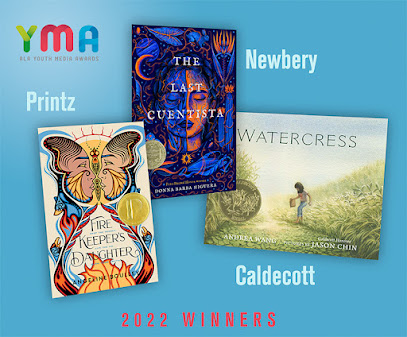
Youth Media Award Winners


The Youth Media Awards were announced today at the end of the ALA Mid-Winter Meeting. There are so many, many awards given out now it is hard to bring recognition to all of them. Congratulations to all the winners!

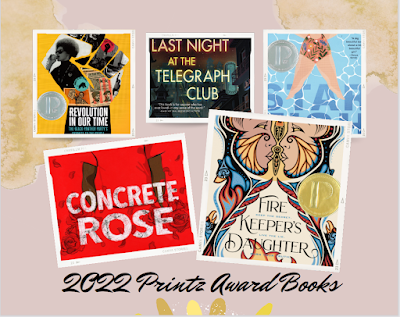
The Printz Award and Honor books, which I shall attempt to read this year, are:


Award winner:

Firekeeper's Daughter
By Angeline Boulley
Henry Holt and Company, and imprint of MacMillan Children's Publishing Group

Daunis, a half-Ojibwe, half-white former hockey player/aspiring scientist never feels fully settled in either her reservation or the outside world. She finds herself even more torn when she witnesses her best friend’s murder and is pulled into an FBI investigation centered on a lethal new drug running wild among her friends and family.

Honor Books:

Concrete Rose 
By Angie Thomas
Balzer+Bray, an imprint of HarperCollins Publishers

If there’s one thing seventeen-year-old Maverick Carter knows, it’s that a real man takes care of his family. As the son of a former gang legend, Mav does that the only way he knows how: dealing for the King Lords. With this money he can help his mom, who works two jobs while his dad’s in prison.

Last Night at the Telegraph Club
By Malinda Lo
Dutton Books for Young Readers, an imprint of Penguin Young Readers, a division of Penguin Random House
 
-year-old Lily Hu can’t remember exactly when the feeling took root—that desire to look, to move closer, to touch. Whenever it started growing, it definitely bloomed the moment she and Kathleen Miller walked under the flashing neon sign of a lesbian bar called the Telegraph Club. Suddenly everything seemed possible.
 
Revolution In Our Time: The Black Panther Party’s Promise to the People
By Kekla Magoon
Candlewick Press
 
Revolution in Our Time puts the Panthers in the proper context of Black American history, from the first arrival of enslaved people to the Black Lives Matter movement of today. Kekla Magoon’s eye-opening work invites a new generation of readers grappling with injustices in the United States to learn from the Panthers’ history and courage, inspiring them to take their own place in the ongoing fight for justice.
 
Starfish
By Lisa Fipps
Nancy Paulsen Books, an imprint of Penguin Random House
 
Bullied and shamed her whole life for being fat, twelve-year-old Ellie finally gains the confidence to stand up for herself, with the help of some wonderful new allies.


-Anne